
Federal Interventions
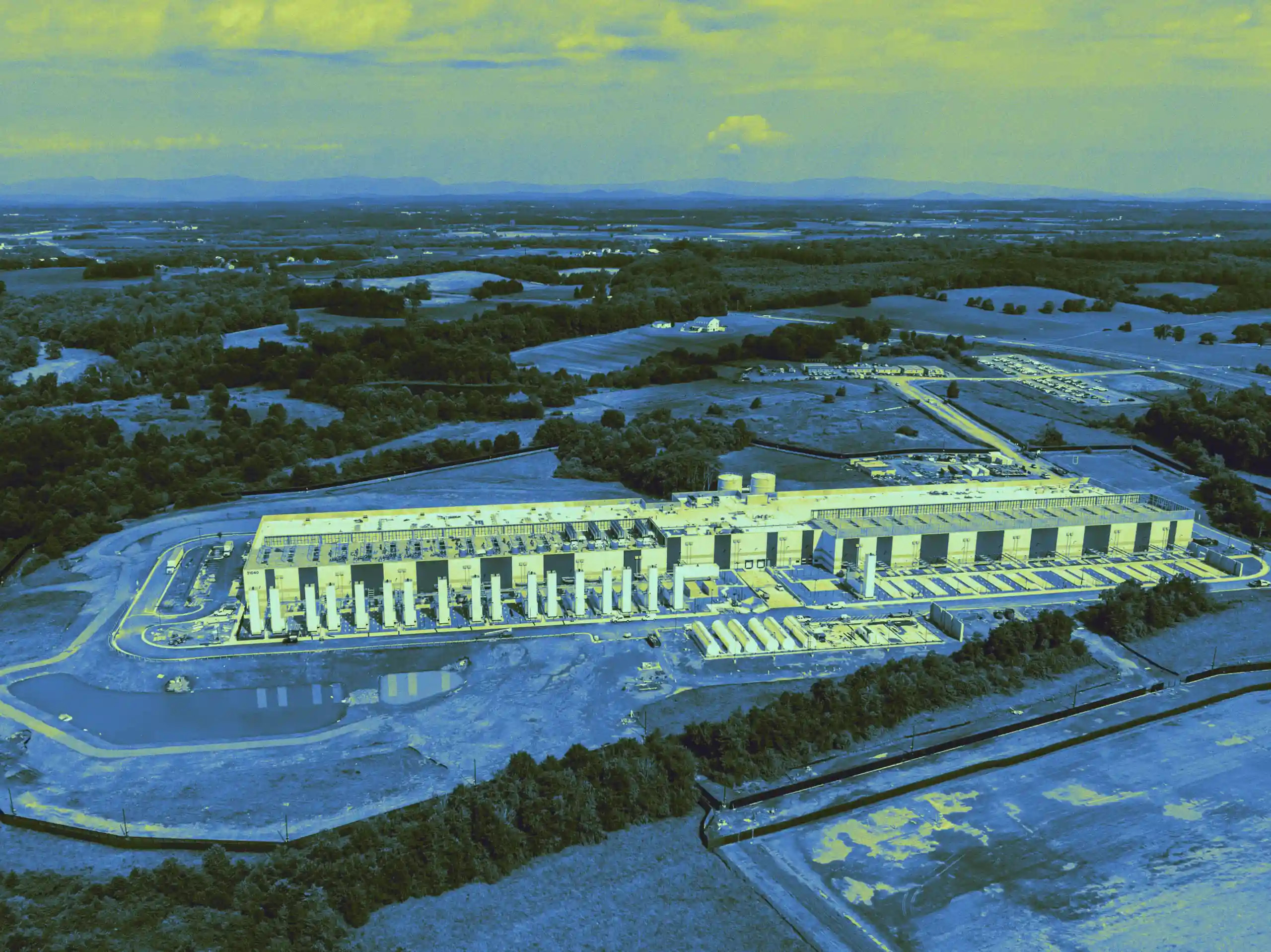
Much of the scope for data center development is set at the local and state level, where lawmakers have jurisdiction over permitting, land use, water, energy grids, and tax incentive structures. But Congress and other federal policymakers have jurisdiction over crucial lanes governing data center development, the associated energy infrastructure, and the industries behind the rapid buildout. In particular, federal policy can offer a coordinating function across the many otherwise fragmented moves happening at local, state, and regional levels. Policymakers can check the jurisdictional shopping of data center builders hopping across town, county, or state borders in search of weaker regulatory regimes. They can more stringently regulate and ensure transparency on the part of the opaque circular investment structures fueling the buildout. And they can roll back the significant subsidies offered by the White House through executive orders (EOs). These federal measures are most potent when accomplished hand in hand with measures to strengthen state and local control.
The full-throttle push for data centers is a vivid case study in the growing nexus between our government, tech companies, oil companies, and private-equity firms, plainly revealing how decades of corporate entrenchment over our democratic systems routinely put private-industry interests over public welfare. Federal policymakers have an extraordinary opportunity to reassert authority over the democratic process and push for bold policy ideas that redefine not only the trajectory of data center development, but our approach to AI policy writ large. A robust federal policy agenda on data center expansion provides Congress and other federal policymakers with the ability to cut to the heart of corporate control over our regulatory systems and double down on investments that shift the balance of power away from private interests and toward public aims. In this way, Congress’s actions can balance the overwhelming push by industry players driving the expansion of data centers while ensuring that local and state authorities can regulate data centers in ways attentive to community needs.
Reject the Bailout for AI Firms
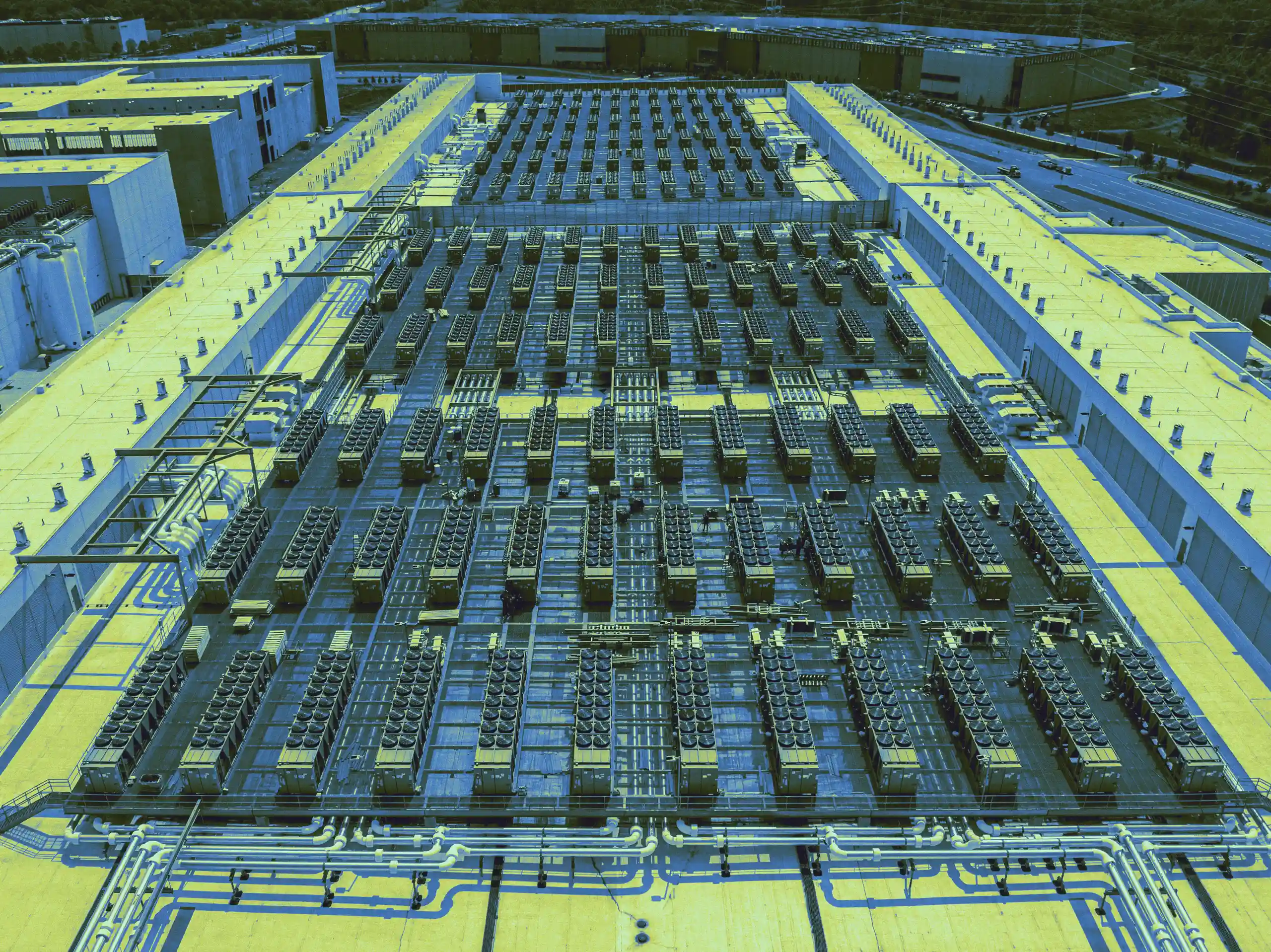
Bailouts occur when governments provide financial or other support to a company or industry to prevent its collapse. The US government has already started bailing out the AI industry. The Trump administration’s executive actions lay out a set of extraordinary measures to boost the AI industry and its push to expand data center infrastructure across the country. These actions include directly investing in AI companies, providing federal tax subsidies and tax credits for data center infrastructure,1 proposing financial support for qualifying data center projects,2 accelerating government adoption of AI,3 brokering sales deals with other countries on behalf of AI companies,4 kick-starting an exports program to support sales to foreign markets,5 and backing a $1 billion loan to bring the Three Mile Island nuclear plant back online to power Microsoft’s AI data centers.6
The federal government can make clear that it will not tolerate a bailout for the AI industry. Actions it can take include the following.
- The Council of Economic Advisers, Artificial Intelligence and the Great Divergence, January 2026, https://www.whitehouse.gov/wp-content/uploads/2026/01/Artificial-Intelligence-and-the-Great-Divergence-5.pdf. ↩︎
- Executive Order 14318 of July 23, 2025, Accelerating Federal Permitting of Data Center Infrastructure, 90 Fed. Reg. 35385 (2025), https://www.federalregister.gov/documents/2025/07/28/2025-14212/accelerating-federal-permitting-of-data-center-infrastructure. ↩︎
- White House, Winning the Race: America’s AI Action Plan, July 2025, https://www.whitehouse.gov/wp-content/uploads/2025/07/Americas-AI-Action-Plan.pdf. ↩︎
- Robbie Whelan and Amrith Ramkumar, “U.S. Approves Deal to Sell AI Chips to Middle East,” Wall Street Journal, November 19, 2025, https://www.wsj.com/tech/ai/u-s-approves-deal-to-sell-ai-chips-to-middle-east-79d68f36. ↩︎
- Executive Order 14320 of July 23, 2025, Promoting the Export of the American AI Technology Stack, title 3 (2025) 35393-95, https://www.federalregister.gov/documents/2025/07/28/2025-14218/promoting-the-export-of-the-american-ai-technology-stack; U.S. Department of State Office of the Spokesperson, “U.S. Department of State Pilots ‘Concierge’ Service for Pax Silica Signatories to Accelerate Core AI Infrastructure Exports,” February 19, 2026, https://www.state.gov/releases/office-of-the-spokesperson/2026/02/u-s-department-of-state-pilots-concierge-service-for-pax-silica-signatories-to-accelerate-core-ai-infrastructure-exports. ↩︎
- Costas Paris, “U.S. Backs $1 Billion Loan to Restart the Three Mile Island Nuclear Plant,” Wall Street Journal, November 18, 2025, https://www.wsj.com/business/energy-oil/three-mile-island-nuclear-power-plant-ba857bc9. ↩︎
Reassert Congressional Authority over White House AI Executive Order Overreach
The Trump administration has made its desire to use executive authority to boost the AI industry and fast-track data centers across the country extremely clear. This includes a drive to preempt state and local authority1 and sidestep congressional authority in service of AI data centers.2 Congress can protect against such unilateral actions.
Moreover, the July 2025 executive order “Accelerating Federal Permitting of Data Center Infrastructure” orders the secretary of commerce to launch an initiative providing financial support for qualifying data center projects.3 Congress, per its authority to control federal spending, can institute oversight over all federal investment in data center projects, including any loans, loan guarantees, grants, tax incentives, and offtake agreements suggested in the executive order.4
- Executive Order 14365 of December 11, 2025, Ensuring a National Policy Framework for Artificial Intelligence, 90 Fed. Reg. 58499 (2025), https://www.federalregister.gov/documents/2025/12/16/2025-23092/ensuring-a-national-policy-framework-for-artificial-intelligence. ↩︎
- Executive Order 14318, Accelerating Federal Permitting of Data Center Infrastructure. ↩︎
- Ibid. ↩︎
- The Appropriations Clause, Art. I, § 9, Cl, 7, reads that “No Money shall be drawn from the Treasury, but in Consequence of Appropriations made by Law.” Congress has the authority to require that a financial program referenced in Sec. 3 of the Executive Order, “Accelerating Federal Permitting of Data Center Infrastructure,” proceed into Congressional appropriations. In that process of appropriations, Congress may impose conditions, limitations, or prohibitions on the use of the funds. ↩︎
Repeal or Roll Back Federal Tax Incentives and Subsidies Given to AI Firms and Data Center Speculators
Repeal or roll-back all federal tax subsidies and credits for data center infrastructure, such as the 100 percent bonus depreciation for IT infrastructure and data center equipment under Public Law 119–211 or the 45Q credit for carbon sequestration technologies.2
Condition Future Federal Investment in AI on Guarantees for the Public
Congress can attach enforceable conditions to all federal investment into AI firms to ensure that any taxpayer support for the AI industry works to benefit the public. See “Establish Public Benefit Conditions on All Federal Investment in AI”for a comprehensive list of these conditions.
Pursue Enforcement Strategy to Thwart Toxic Market Behavior
Federal policymakers can pursue an enforcement strategy that utilizes competition, financial, fraud, and transparency regulations to surface and hold accountable toxic market behavior by AI companies.
Make Clear There Will Be No Bailout for AI Firms That Fail
Congressional policymakers can message clearly that there will be no federal bailout for AI firms that fail.
Fight Federal Preemption to Preserve Local and State Authority over AI Regulation
AI regulation goes hand in hand with data center regulation to ensure that if data centers are built, they cannot do so in service of technology that harms people. AI systems are increasingly deployed in ways that expand the power of bosses, landlords, and corporations at the expense of workers, tenants, and everyday people. As the data center boom serves to rapidly accelerate AI use across all sectors of our society, we need urgent actions to protect the public and hold tech companies accountable to the communities affected by these technologies, particularly communities of color, immigrants, and poor and working-class people.
And yet, the federal government has repeatedly attempted to block states from passing laws regulating AI,1 encroaching upon local and state authority and endangering millions of people. The administration has also broadcast its desire to preempt state and local authority to pave the way for AI data center expansion.2
Federal policymakers can protect against this administration’s attempts to preempt state and local power and sidestep congressional authority in service of AI data centers.
- Cecilia Kang, “Defeat of a 10-Year Ban on State A.I. Laws Is a Blow to Tech Industry,” New York Times, July 1, 2025, https://www.nytimes.com/2025/07/01/us/politics/state-ai-laws.html; and White House, Ensuring a National Policy Framework for Artificial Intelligence, Executive Orders, December 11, 2025, https://www.whitehouse.gov/presidential-actions/2025/12/eliminating-state-law-obstruction-of-national-artificial-intelligence-policy. ↩︎
- Under the December 2025 Executive Order, Ensuring a National Policy Framework for Artificial Intelligence, the administration plans to prepare a legislative recommendation for a uniform federal policy framework for AI that preempts state and local laws. This legislative recommendation will include preemption recommendations around “generally applicable permitting reforms” for AI data center infrastructure. See Executive Order 14365, Ensuring a National Policy Framework for Artificial Intelligence; and Executive Order 14318, Accelerating Federal Permitting of Data Center Infrastructure. ↩︎
Establish Federal Deference to State and Local Power
Congress can reject attempts to strip states of their ability to protect constituents from data centers through moratoriums or proposed national legislative frameworks, ensuring that permitting decisions for data centers remain firmly under state and local control. Congress can also make clear that the President cannot use emergency authorities to usurp state, county, or municipal laws and regulations—including zoning and permitting laws—with regard to data centers and associated energy infrastructure.1
- Thanks to Public Citizen for this recommendation. See Deanna Noel and Meghan Pazik, “Reining in Big Tech: Policy Solutions to Address the Data Center Buildout,” Public Citizen, December 3, 2025, https://www.citizen.org/article/reining-in-big-tech-policy-solutions-to-address-the-data-center-buildout. ↩︎
Reject Federal Sandbox and Civil Immunity Bills
Reject federal sandbox1 and civil immunity2 bills that function as a moratorium by blocking states from passing and enforcing their own laws to regulate AI use cases.
- S. 2750, SANDBOX Act, 119th Cong. (2025), introduced by Sen. Ted Cruz, https://www.congress.gov/bill/119th-congress/senate-bill/2750. ↩︎
- S. 2081, RISE Act, 119th Cong. (2025), introduced by Sen. Cynthia Lummis, https://www.congress.gov/bill/119th-congress/senate-bill/2081/text. ↩︎
Resist Industry-Written Federal Standards
Resist passing weak and industry-written federal standards that effectively function as a moratorium, blocking states from passing stringent standards to protect their constituents.1 In particular, the federal government can scrutinize the upcoming legislative recommendation establishing a federal policy framework for AI that preempts state AI laws prepared by the administration under the December 2025 Executive Order.2
- Kate Brennan, Amba Kak, and Sarah Myers West, “The Storm Clouds Looming Past the State Moratorium: Weak Regulation is as Bad as None,” Tech Policy Press, June 10, 2025, https://www.techpolicy.press/the-storm-clouds-looming-past-the-state-moratorium-weak-regulation-is-as-bad-as-none. ↩︎
- Executive Order 14365, Ensuring a National Policy Framework for Artificial Intelligence. ↩︎
Tackle Corporate Concentration Across the Entire AI Stack
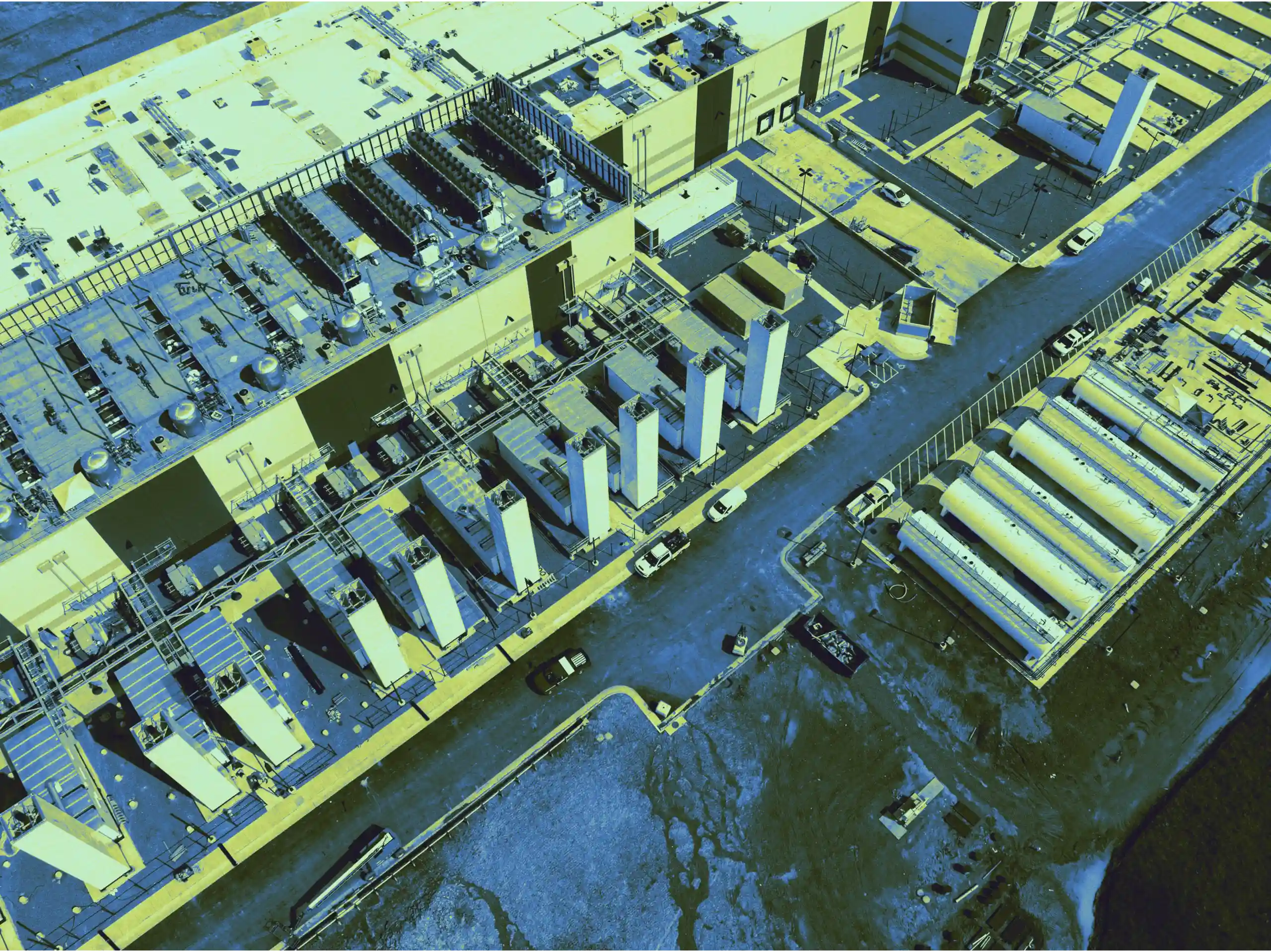
Tech companies are riding the current AI boom to amass even more market power, relying on a permissive regulatory environment that rewards consolidation and market dominance. Big Tech firms have spent decades amassing unrestrained data access and economic power and then using those advantages to control key inputs at all levels of the AI stack. The industry, across all aspects of the AI supply chain, utilizes mergers, acquisitions, and inflated circular spending deals to further consolidate power. This trend toward monopolization in an already concentrated sector will only increase if we don’t take action, with deep consequences for our innovation ecosystem, our economic stability, and our long-term prosperity.
Promote a Sharp-Edged Competition Toolkit to De-Rig the AI Market
Federal policymakers canpromote a robust competition toolkit, with a particular focus on abuse of dominance in the AI supply chain and energy sector.
Structural Separation
Structural separation is a tool to break up big companies so they cannot own multiple stages of a supply chain. In the AI market, structural separation may look like preventing cloud companies from participating in the market for AI foundation models, requiring that Big Tech firms divest their cloud computing businesses from the rest of their corporate structure, preventing AI foundation model companies from participating in other markets related to AI, or preventing chip designers from investing in AI development companies. It also may look like preventing private-equity firms from owning energy utility companies and power companies, or Big Tech companies from owning energy companies and data centers.
Heightened Scrutiny of Mergers, Acquisitions, and Partnerships
Require heightened scrutiny of mergers, acquisitions, and partnerships involving Big Tech hyperscalers and/or private-equity firms and their subsidiaries.
Bright-Line Rules
Rather than rely exclusively on enforcement of antitrust laws after a harm has already occurred, ex ante rules proactively prevent harm before it can occur. Enforcers can use these proactive regulations to prevent Big Tech hyperscalers from self-preferencing their own products or engaging in discriminatory treatment.
Put Firms on Notice
Quick measures to put market players on notice could include warning letters or use of subpoena power to scrutinize financial transactions within the sector, particularly those involving circular spending deals or those that use special-purpose vehicles (SPVs) to obscure information from investors.
Enact a Federal Moratorium on New Data Centers Until Public Protections Are in Place
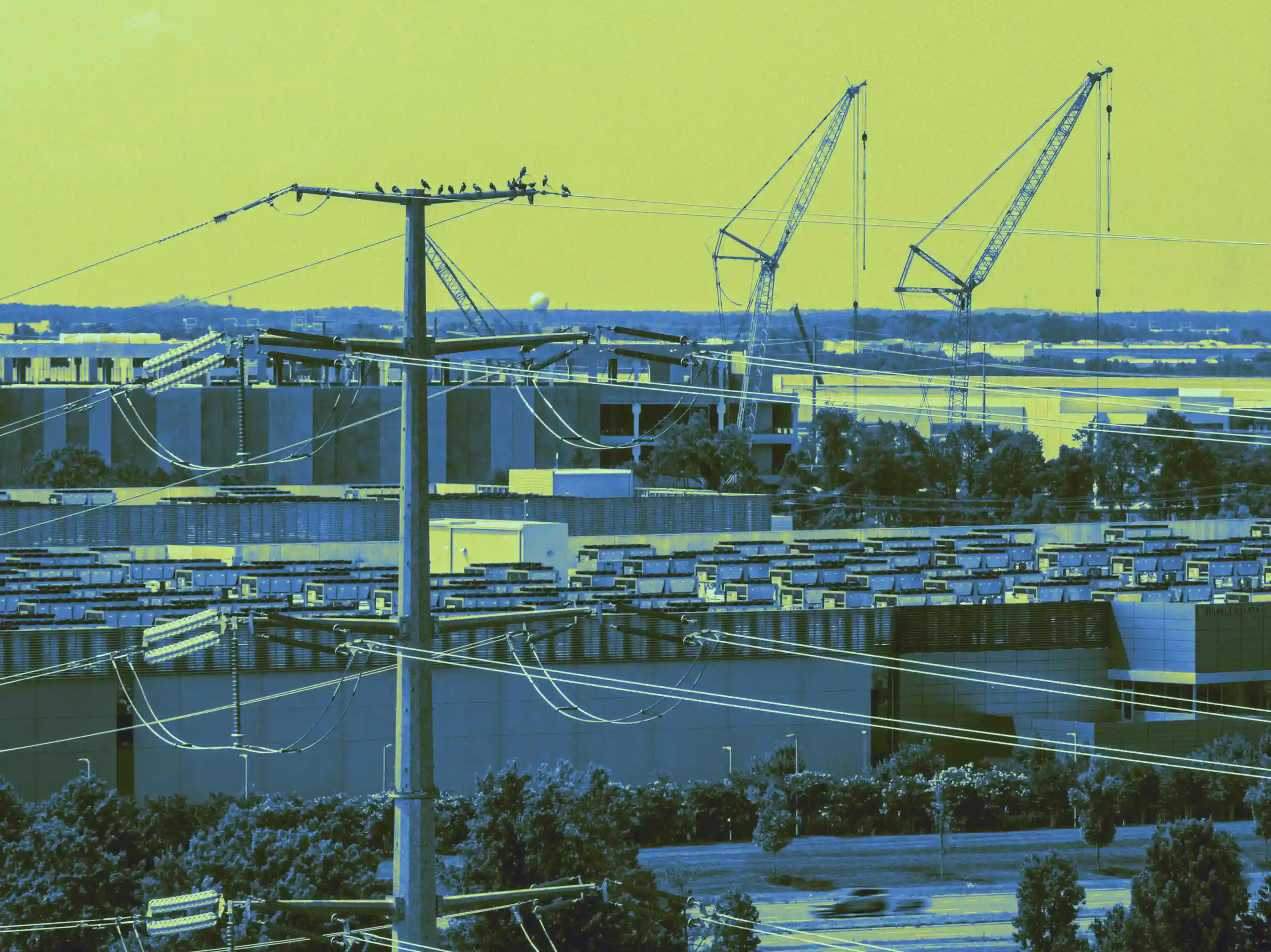
While much of the pushback against specific data centers is occurring within communities where proposed projects will be sited, the public impact of data centers is not limited to the immediate neighborhood where they are located—creating a collective action problem that can be addressed effectively at the federal level. When a new data center connects to the grid in one town, utility bills can increase for all customers of that service region. Data center developers are in some cases responding to local moratoriums or local opposition by targeting adjacent districts with weaker protections (as happened recently when a data center project that received pushback in Memphis was moved across the state line, nevertheless impacting the same constituents who breathe the same air and drink the same water).1
Enact a Time-Bound Moratorium
A time-bound, national moratorium on the approval and construction of new data centers would allow local governments, states, and public utility commissions to pass widely applicable regulations to protect their constituents from unrestrained hyperscaler development. For a comprehensive list of state and local policy recommendations, see our North Star Data Center Policy Toolkit: State and Local Policy Interventions to Stop Rampant AI Data Center Expansion.
Strong example
Senator Bernie Sanders and Representative Ocasio-Cortez announced legislation proposing a moratorium on new construction or updates until Congress passes comprehensive AI legislation.
Strong Example
Over two hundred environmental groups have called for a national moratorium on new data center construction until regulations are put in place.
Strong Example
Honor the Earth, Indigenous Environmental Network, and the No Data Centers on Native Land Coalition have called for a three-year data center moratorium on tribal lands.
Include Anti-Federal Preemption Provisions
If federal moratorium legislation includes any federal regulations, it should include a provision specifying that federal laws will not preempt local and state authority to regulate data centers.
Strong example Language
“Nothing in this chapter shall preclude a state or local government or instrumentality thereof from establishing additional regulations requirements that are more stringent than federal standards. This chapter shall prohibit any federal agency from overriding or circumventing state, tribal, territorial, or local land use, water, environmental, or utility review processes.”
- Sophie Bates, “Elon Musk’s xAI to Build $20 Billion Data Center in Mississippi,” ABC, January 8, 2026, https://abcnews.go.com/Technology/wireStory/elon-musks-xai-build-20-billion-data-center-129038245. ↩︎

Restrict Data Centers on Federal Land
Given both the absence of clear public benefit from the AI boom and the unresolved risks around reliably supplying data centers with necessary resources, there exists little justification for turning over public land to private technology firms—by the Department of Energy or any other federal agency.1 We must protect federal lands and waters from the development of data centers and the infrastructure needed to support them.
- U.S. Department of Energy, “DOE Identifies 16 Federal Sites Across the Country for Data Center and AI Infrastructure Development,” April 3, 2025, https://www.energy.gov/articles/doe-identifies-16-federal-sites-across-country-data-center-and-ai-infrastructure. ↩︎
No Private Data Centers on Federal Land
Prohibit the Department of Energy or any other federal agency from leasing land or providing easements to private developers to build AI infrastructure on public land. This includes actual data centers and the infrastructure to support them, like on-site electricity generation and backup electricity facilities, natural gas and carbon capture and storage pipelines, and off-site energy projects.
Enact Enforceable Conditions on Data Center Development on Federal Land and Waters
If prohibition of data centers on public lands and waters is not possible, Congress can attach strong, enforceable conditions onto all data center development (including the infrastructure to support data centers) on federal lands to ensure data centers are publicly owned and are accountable to the public. This strategy opens up space to consider how technological development—including data centers—might unfold if it were guided by public interest objectives rather than private control over the AI stack. Beyond the limits of this administration’s infrastructure approach, there remains significant opportunity to reimagine AI infrastructure development to support public objectives and fund best-in-class research trajectories sidelined by profit-driven incentives. The conditions that bring us closer to this technological future include the following:
Data Centers Tapping into Local and State Resources Are Presumed Rejected Unless They Meet Local and State Approval Processes
While public infrastructure on federal land is generally exempt from local zoning laws, Congress can act to ensure that where data center development taps into local or state public resources—such as public aquifers or regional transmission lines—all development must abide by state and local approval processes, including the ability for communities to reject incoming development where it does not abide by locally set standards.1
All Data Centers on Federal Land Must Be Publicly Owned and Used for the Benefit of Public Research
All agencies (including land and water management agencies) must restrict data center development on federal lands and waters to advance work that supports, democratizes, or advances public R & D technology mandates. These facilities should be owned and operated by public research institutions and should provide computing and data initiatives to support alternative AI research trajectories outside the “bigger is better” scaling paradigm, alongside non-AI research that still requires access to large scale computing. Research housed in federal data centers cannot be used to support the defense industry, weapons research, military expansion, fossil-fuel extraction and combustion, nuclear permitting, predictive policing systems, immigration enforcement, and other harms to be specified in the development process.
Specify That Federal Data Centers Are Not Exempt from State Utility Processes
Federal and regional energy regulators, including the Federal Energy Regulatory Commission (FERC), can formalize clear rules for colocation of large loads from data centers and power generation. Colocation policies must not risk creating de facto pathways for AI data centers that preference their development over renewable-energy generation projects.2 In other words, polluting power plants must not power AI data centers both behind and in front of the meter while the grid around it feels associated price fluctuations, reliability issues, and ambient regional system stress.3
Such policies must require full participation in state utility processes and include equity and sustainability guarantees. Federal data centers must participate in holistic transmission planning and cost burden analyses on local ratepayers, and must meet renewable energy mandates. Such state utility processes ensure both industry accountability to the public and grid accessibility, and safeguard progress toward state-level renewable-energy goals.
Institute Binding Renewable Energy Requirements
Data centers serviced on federal land cannot be served by oil, gas, or nuclear energy. Require that data centers procure or subscribe to locally deliverable, additional, and zero-emissions renewable energy at all hours of the day, every day of the year, as a condition for receiving federal approval. All energy generation colocated on federal land must be renewable energy. Diesel backup generators are prohibited.
Data Centers Must Offset Tax Exemptions
Because public land is not subject to local and state taxes, Congress can require a payment in lieu of taxes (also known as a PILOT agreement) equivalent to the full tax value of all property taxes and taxable assets (such as computer peripherals and electricity sales tax).
Require Comprehensive Transparency Mechanisms and Monthly Reporting
Require all projects on federal land to abide by strict transparency requirements, reported monthly to a federal agency charged with monitoring, tracking, and enforcing transparency requirements. For a breakout of these recommendations, see “Establish Federal Oversight and Transparency Mechanisms.”
- Under the Property Clause in Art. IV, § 3, cl. 2, Congress has plenary authority over federal lands and may, through legislation, condition federal land use in compliance with state and local regulatory regimes. What’s more, federal facilities are generally immune from state permitting requirements under the Supremacy Clause in Art. VI, cl. 2. But Congress can waive that immunity with a clear directive. For example, Congress has expressly subjected federal development to state and local approval processes, as it has done under the Clean Air Act in 42 U.S.C. § 7418 and other cooperative federalism statutes. As such, Congress may require that data center development on public lands accessing aquifers or transmission infrastructure comply with state and local permitting requirements, including denial where locally adopted standards are not satisfied. ↩︎
- Federal Energy Regulatory Commissions, “FERC Orders Action on Co-Location Issues Related to Data Centers Running AI,” February 20, 2025, https://www.ferc.gov/news-events/news/ferc-orders-action-co-location-issues-related-data-centers-running-ai; Federal Energy Regulatory Commission, “Fact Sheet: FERC Directs Nation’s Largest Grid Operator to Create New Rules to Embrace Innovation and Protect Consumers,” December 18, 2025, https://www.ferc.gov/news-events/news/fact-sheet-ferc-directs-nations-largest-grid-operator-create-new-rules-embrace. ↩︎
- Justin Kollar, “Planning Under Preemption: State Power and Local Authority in the AI Data Center Era,” Journal of the American Planning Association, February 18, 2026, https://doi.org/10.1080/01944363.2026.2618221. ↩︎
Establish Public Benefit Conditions on All Federal Investment in AI
The federal government has for too long subsidized the largest companies in the world, offering billions of dollars in tax breaks and other vehicles of financial support while actively defunding institutions that shore up the broader public welfare. As a first measure, the federal government should repeal or roll back federal tax incentives and subsidies given to AI firms and data center speculators to prevent the government from backstopping the AI industry, as outlined in Reject the Bailout for AI Firms.
Second, the federal government can play an important role in shaping the kinds of public infrastructure that private industry is not incentivized to develop. This strategy opens up space to consider how technological development—including data centers—might unfold if it were guided by public-interest objectives rather than private control over the AI stack.
Congress can achieve this by attaching bold, enforceable conditions onto all existing federal funding, grants, tax exemptions,1 and financial support2 going into data centers. This is a way for Congress to reassert congressional authority over federal investment and ensure taxpayer dollars are accountable to the public. These conditions would require any AI firm or data center company receiving federal funding to abide by the strictest possible requirements for data center development, including full deference to local and state authorities.
These conditions should not be used to justify additional federal funding for any aspect of the tech or data center industry, and include the following:
Establish Binding Authority and a Mandate to Enforce
Conditions must be attached in clear, binding language and contain strong enforcement mechanisms, including a mandate to enforce.
Automatic Clawback Provisions with Independent Verification
All assistance—tax expenditures, grants, loans, loan guarantees, preferential tariffs, expedited permitting, and federally backed infrastructure—must include automatic, proportional clawbacks for noncompliance and must be verified through independent data (e.g., unemployment insurance wage records for job claims; audited utility invoices and interconnection cost ledgers for cost-shifting claims; or verified tax expenditure schedules for abatements). Specify that company self-attestations do not satisfy compliance. Repeated noncompliance triggers termination of assistance, repayment with interest, and ineligibility for future support.
Strong example
Specific legal enforcement measures already exist for certain portions of current industrial policy legislation, but these could be strengthened. In the CHIPS and Science Act, many conditions were not legally binding and were rolled back in the implementation process. However, in one provision, the Department of Commerce utilized the rulemaking process to determine enforcement mechanisms for program recipients that do not comply with the Act’s Technology Clawback provision, which prohibits fund recipients from engaging in research or licensing efforts with “foreign entities of concern.” The rule states that failure to comply with the provision “may result in recovery of up to the full amount of Federal financial assistance.”
Condition: Deference to Local and State Authority
Data centers receiving federal funding must abide by all local and state approval requirements. The federal government cannot provide expedited approvals designed to sidestep local and state authority for data center projects.
Condition: No Tax Abatements or Subsidies for Data Centers
Stipulate that any firms receiving federal funds, grants, tax credits, or investment for the purposes of data center development or accompanying infrastructure cannot abate local or state taxes. (Note: See recommendation for repealing all federal tax subsidies and credits for data center projects.)
Condition: Prohibition on Stock Buybacks
All companies receiving federal support for data center development are prohibited from using any funds to engage in stock buybacks within a set period of time. This prohibition must be stated explicitly and clearly, and must apply to all funds. Learnings from the IRA and CHIPS Act suggest that a mere “preference” for recipients that “commit” to not engage in stock buybacks is insufficient. During the early CHIPS Act implementation, the Department of Commerce had discretion to encourage recipients to refrain from stock buybacks as a condition of receiving CHIPS Act subsidies. A 2024 report from the American Economic Liberties Project (AELP) highlighted that although the statute prohibits CHIPS funds for buybacks, firms with large prior buyback histories could still engage in buybacks while benefiting from federal subsidies.3 Stronger implementation guidance and tighter federal guardrails are necessary to ensure incentives support real investment instead of freeing up capital for shareholder distributions.
Condition: Restrictions on Corporate Executive Compensation
No executive and C-suite level staff of any company involved in the building, financing, or operating of data centers receiving federal investment should be allowed to make in excess of $5 million (including equity and benefits) until robust, comprehensive regulations are in place protecting the public from data center harms.
Condition: Ratepayer Protection Requirements
Data centers must pay for 100 percent of the costs necessary to service them, including transmission, energy generation, capacity, and financing costs.
Condition: Prohibition on Diesel Generators
Stipulate that any data centers receiving federal funds cannot use on-site diesel generators.
Condition: Renewable Energy Requirements
Data centers receiving federal support cannot be served by oil, gas, or nuclear energy. Require that data centers procure or subscribe to locally deliverable, additional, and zero-emissions renewable energy at all hours of the day, every day of the year, as a condition for receiving federal approval. All energy generation colocated on federal land must be renewable energy. Diesel backup generators are prohibited.
Condition: Fair Labor Requirements
Note: Data centers are not significant permanent job creators; many of the promised jobs tend to be temporary construction positions or low-paid, temporary, subcontracted data center operations roles. Establishing fair labor requirements could offset some harm, but would not address the underlying reality.
High-Quality, Stable, and Local Jobs
Funding must require data centers to hire full-time data center staff from the local population or partner with community organizations on first-source hiring programs. These employees should be directly employed by the data center operator and not hired as subcontractors. Funding must also require neutrality agreements to provide space for union organizing on-site. For construction jobs, localities should demand project labor agreements with a commitment that construction projects will employ local building-trade union workers. Funding may also require prioritizing the hiring of underrepresented groups in specific industries or labor markets—such as women in construction or veterans.
Wages
Jobs should pay, at a minimum, a living wage adjusted annually for inflation. Ideally, wages should align with market-based standards tied to the state or regional median wage for the data center industry. There must be pay equity for equal work between contractors and the data center company’s own employees.
Benefits
Employers should be required to provide health insurance and cover at least 50 percent of the premium cost for each worker. Localities should also demand that data centers provide childcare to all workers.
Health, Safety, and Well-Being
Localities should regulate working conditions, including ensuring there is an adequate break room with strong health and safety standards.
Condition: Require Comprehensive Transparency Mechanisms and Monthly Reporting
Require all projects receiving federal support to abide by strict transparency requirements, reported monthly to a federal agency charged with monitoring, tracking, and enforcing transparency requirements.
Before Operation Begins
Require the following information to be certified in a public clearinghouse (a publicly available database). Federal agencies should retain the right to revoke or suspend data center permits for failure to adequately disclose the following metrics:
Financial Vehicles
Names of all companies involved in a data center project (including developer, shell companies, data center operators and/or end users, and financers). Require disclosure of the ultimate parent company and beneficial ownership for all entities involved. Require that any subsidy caps, eligibility limits, disclosure requirements, and enforcement actions apply to the parent company aggregated across all subsidiaries, affiliates, special purpose vehicles (SPVs), and joint ventures so that firms cannot evade limits by shifting ownership to SPVs.
Water Usage
Comprehensive accounting of the data center’s projected water usage (broken out by month), including projected water used in construction, server cooling, facility cooling (including cooling towers) and other ancillary water uses; projected water sources; anticipated water-conservation plan; and water infrastructure costs.
Energy Usage and Infrastructure Needs
Comprehensive accounting of the data center’s projected monthly energy usage; breakdown of all necessary costs to service them, including transmission, energy generation, capacity, and financing costs.
Energy Emissions and Air Quality
Projected value of all on-site energy emissions. Require the installation and use of best-in-class technology to continuously monitor and report air quality.
Labor
Require projected breakout of temporary and permanent jobs, including number of full-time employees, subcontractors, and temporary workers. Require union labor where possible.
After Operation Begins
Federal agencies must monitor and enforce transparency metrics. Failure to properly disclose metrics will result in revocation of permit or operating license.
Financial Vehicles
Annual reporting of all companies involved in a data center project (including developer, shell companies, data center operators and/or end users, and financers).
Water Usage
Monthly, comprehensive accounting of the data center’s actual water usage, including projected water used in construction, server cooling, facility cooling (including cooling towers) and other ancillary water uses; projected water sources; anticipated water-conservation plan; and water infrastructure costs.
Energy Usage and Infrastructure Needs
Comprehensive accounting of the data center’s monthly energy usage; annual summary of costs necessary to service the data center, including costs arising from transmission, energy generation, capacity, and financing.
Energy Emissions and Air Quality
Actual value of all on-site energy emissions and air-quality metrics, reported monthly.
Labor
Require annual breakout of temporary and permanent jobs, including number of full-time employees, subcontractors, temporary workers, and unionization status of all. Include demographics such as race, gender identity, sexual orientation, education level, and pay and benefits data for each represented group. Include client overhead cost for the bill-rate per head count of subcontracted workers, organized by job title.
- Including 100 percent bonus depreciation for IT infrastructure and data center equipment under Public Law 119–21. Public Law 119–21, 119th Cong., 1st sess. (July 4, 2025), 139 Stat. 72. ↩︎
- This includes “qualifying investment projects” under the July 2025 Executive Order 14318, Accelerating Federal Permitting of Data Center Infrastructure. ↩︎
- American Economic Liberties Project, Reshoring and Restoring: CHIPS Implementation for a Competitive Semiconductor Industry, American Economic Liberties Project, page 6, February 6, 2024, https://www.economicliberties.us/wp-content/uploads/2024/02/20240117-AELP-IndPolSeries-CHIPS-Paper_v4-1.pdf. For example, BAE Systems, Inc., a subcontractor that received one of the first CHIPS awards ($35 million), was in the midst of a multibillion‑dollar stock repurchase program, including roughly $3 billion in buybacks in 2021–22 and another $1.9 billion authorized in 2023. ↩︎
Establish Federal Oversight and Transparency Mechanisms
Despite the staggering projections for energy and resource use coming from the data center industry, there is no comprehensive system for tracking and evaluating data center resource use. Data center developers and operators often try to keep information about their deals and resource use secret, obscuring details from the public and claiming that transparency can tip off competitors, threaten national security, and affect negotiations for tax incentives. While states should develop their own state oversight mechanisms—including the ability to intervene to stop data center proposals that threaten state resources—the effects from data centers are felt regionally and across state lines, requiring a federalized approach to data center transparency.
Establish a Federal Clearinghouse
Require a federal agency to design, implement, and maintain a publicly accessible website to publicize information about all data center facilities across the country. Charge this agency with monitoring and enforcing the transparency requirements outlined below. The federal clearinghouse should work in tandem with state clearinghouses to standardize reporting.
Require Comprehensive Reporting
Require all data center projects—whether or not they receive federal support—to report the following transparency measures to a federal agency charged with monitoring, tracking, and enforcing transparency requirements:
Before Operation Begins
Require the following information to be certified in a public clearinghouse (a publicly available database). Federal agencies should retain the right to revoke or suspend data center permits for failing to adequately disclose the following metrics:
Financial Vehicles
Names of all companies involved in a data center project (including developer, shell companies, data center operators and/or end users, and financers).
Water Usage
Comprehensive accounting of the data center’s projected water usage (broken out by month), including projected water used in construction, server cooling, facility cooling (including cooling towers) and other ancillary water uses; projected water sources; anticipated water-conservation plan; and water infrastructure costs.
Energy Usage and Infrastructure Needs
Comprehensive accounting of the data center’s projected monthly energy usage; breakdown of all necessary costs to service the data center, including transmission, energy generation, capacity, and financing costs.
Energy Emissions and Air Quality
Projected value of all on-site energy emissions. Require the installation and use of best-in-class technology to continuously monitor and report air quality.
Labor
Require projected breakout of temporary and permanent jobs, including number of full-time employees, subcontractors, and temporary workers.
Environmental Review
Mandate that the construction of each data center be treated (1) as a major federal action, and (2) as a major impact on the environment under the National Environmental Policy Act (NEPA), thereby making each subject to a few environmental impact statements (EIS). At a minimum, an EIS must evaluate
- water withdrawals, and sources
- water discharge and thermal pollution
- local and regional electricity-systems impacts
- backup generation emissions
- air pollution and particulate emissions
- chemicals used for cooling
- noise impacts
- cumulative impacts, and
- disparate impacts.
After Operation Begins
Federal agencies must monitor and enforce transparency metrics. Failure to properly disclose metrics will result in revocation of permit or operating license.
Financial Vehicles
Annual reporting of all companies involved in a data center project (including developer, shell companies, data center operators and/or end users, and financers).
Water Usage
Require monthly, comprehensive accounting of the data center’s actual water usage, including projected water used in construction, server cooling, facility cooling (including cooling towers), and other ancillary water uses; projected water sources; anticipated water-conservation plan; and water infrastructure costs.
Energy Usage and Infrastructure Needs
Require comprehensive accounting of the data center’s monthly energy usage; and annual summary of costs necessary to service them, including from transmission, energy generation, capacity, and financing.
Energy Emissions and Air Quality
Actual value of all on-site energy emissions and air quality metrics must be reported monthly.
Labor
Require annual breakout of temporary and permanent jobs, including number of full-time employees, subcontractors, and temporary workers. Include demographics such as race, gender identity, sexual orientation, education level, and pay and benefits data for each represented group. Include client overhead cost for the bill-rate per head count of subcontracted workers, organized by job title.
Clearinghouse Transparency
The clearinghouse must also publish the following information to ensure transparency about any federal agencies issuing permits for a data center project and its associated on- and off-site infrastructure:
Lead Agency
There should be a lead agency designated for the project, and the contact information for the staff of that agency should be publicly accessible.
Permit Status
All agencies issuing permits for a data center project and its associated on- and off-site infrastructure must regularly update the status of their respective permits for the project.
Comment Period
All deadlines for the comment periods of each permit must be clearly communicated.
Review
Estimated timelines for any necessary environmental review and transparent completion dates for any required permitting must be clearly communicated.
Ban the Use of Nondisclosure Agreements in Economic Development
Nondisclosure agreements (NDAs) are secrecy contracts signed between a data center developer and local government(s) that prohibit the government from sharing information about the data center development deal with the broader public. These are widely used in data center development—in Virginia,1 25 out of 31 localities with an existing, approved, or proposed data center had an NDA—and impede the public’s ability to make informed decisions about their community. Congress can act to prohibit data center developers from entering into NDAs with state and local governments in large economic development projects.
- Eric Bonds and Viktor Newby, “Data Centers, Non-Disclosure Agreements and Democracy,” Virginia Mercury, April 30, 2025, https://virginiamercury.com/2025/04/30/data-centers-non-disclosure-agreements-and-democracy/?utm. ↩︎
Prohibit Trade-Secret Exemptions From Public-Disclosure Laws
Public-record and agency disclosure laws grant the public the right to inspect government records. This is a critical way for the public to learn about industries that are attempting to move into their communities. Congress can act to clearly specify that information collected during local, state, and federal data center application processes does not constitute sensitive information or trade secrets and cannot be redacted or exempted from public-disclosure laws. Such information includes:
- noise study and mitigation
- projected and actual energy usage and mitigation
- on-site energy emissions
- projected and actual water usage and mitigation
- value of tax abatements developer is receiving for the project
- names of all companies involved in the data center project (including developer, shell companies, data center operators and/or end users, and financers)
- jobs (short-term and permanent, hiring efforts, permanent employee wages)
- the results of a displacement and holistic environmental-impact report, centering environmental justice considerations (such as those emerging from redlined/fenceline communities), and establishing that the data center will not exacerbate the displacement of residents and local businesses
Advance a Progressive Energy Agenda to Safeguard Our Energy Grid
Our energy sector has faced decades of consolidation and private takeover, with the regulatory processes designed to check abuses on corporate power captured by industry and marred by corruption. Data centers are bringing these issues home for households across the country that are facing rising electricity bills; policymakers and utilities are prioritizing the needs and interests of data center developers and oil and tech executives over those of everyday consumers. This opens up a significant opportunity to advance a progressive policy agenda for energy security and resilience—one that treats reliability, affordability, and sustainability as the bedrock of an innovative economy.
Advance Bold Public Power Campaigns to Reassert Public, Democratic Control Over Our Power System
Private, for-profit monopolies currently provide 70 percent of electricity in the United States. The other 30 percent is provided by publicly or mutually owned utilities. Over the past three years, investor-owned utility (IOU) residential electricity rates have increased 49 percent more than inflation, whereas the rates from publicly owned utilities have increased 44 percent less than inflation.1 Public power campaigns in Milwaukee,2 New York,3 Tucson, and other cities are demanding shifts to democratically controlled power systems to protect against rapidly rising electricity prices.4 Legislators can and should support local and national public power campaigns, using federal power to intervene where appropriate.
- Mark Ellis, Rate of Return Equals Cost of Capital: A Simple, Fair Formula to Stop Investor-Owned Utilities From Overcharging the Public, American Economic Liberties Project, page 2, January 2025, https://www.economicliberties.us/wp-content/uploads/2025/01/20250102-aelp-ror-v5.pdf. ↩︎
- Power to the People Milwaukee, https://www.powertothepeoplemke.org. ↩︎
- Public Power NY, https://publicpowerny.org. ↩︎
- Derek Seidman, “As Electricity Bills Rise, Activists Are Demanding Public Control of Utilities,” Truthout, January 2, 2026, https://truthout.org/articles/as-electricity-bills-rise-activists-are-demanding-public-control-of-utilities. ↩︎
Tackle Concentrated Power Across the Energy Stack
Our energy sector is facing increased consolidation and private takeover, with Big Tech and private-equity companies moving to acquire energy companies, and private equity taking over investor-owned utility companies across the country. Blackstone, one of the world’s largest private-equity firms, recently filed with the Public Utility Commission of Texas to acquire Texas‑New Mexico Power’s parent company.1 In Minnesota, the state’s Public Utilities Commission (MN PUC) approved the $6.2 billion sale of Allete, parent company of Minnesota Power, to a subsidiary of BlackRock and the Canada Pension Plan Investment Board.2
Note: The water sector is also facing increased consolidation and threats of private-equity takeover. While this section specifically deals with the energy stack, it is critical for federal policymakers to address private takeover within the utility sector writ large.
Promote a Robust Antitrust Toolkit
Enforce antitrust laws that limit acquisitions and investments in key energy infrastructure that lead to undue corporate influence over public goods. Heightened scrutiny of mergers, acquisitions, and partnerships involving Big Tech hyperscalers and private-equity firms that have an interest in data center development and associated infrastructure.
Prevent Private-Equity Takeover of Investor-Owned Utilities
The federal government can leverage authorities from FERC, the Department of Justice (DOJ), and the Federal Communications Commission (FCC) to prohibit the private-equity takeover of investor-owned utilities. Where that is not legally feasible, require strict scrutiny of any proposed acquisition where a private-equity firm seeks to acquire at least 10 percent or more of the voting securities of a regulated entity and apply a robust public interest standard to adjudicate the change of control request.
Note: The 10 percent threshold stems from two 2022 FERC decisions establishing a rebuttable presumption that ownership of more than 10 percent of the voting securities of a regulated entity constitutes a change of control, but that ownership of less than 10 percent may still constitute a change of control if the investor’s own officers or directors are appointed to the board of the regulated entity.3This suggests that 10 percent should be the ceiling.
- Texas‑New Mexico Power, “Texas‑New Mexico Power Files Acquisition Application with the Public Utility Commission of Texas,” August 25, 2025, https://tnmp.com/about-us/news-media/texas-new-mexico-power-files-acquisition-application-public-utility-commission; Claire Hao, “Who Benefits If Wall Street Buys Your Utility? Texas-New Mexico Power Customers Could Soon Find Out,” MSN, January 30, 2026, https://www.msn.com/en-us/money/companies/who-benefits-if-wall-street-buys-your-utility-texas-new-mexico-power-customers-could-soon-find-out/ar-AA1Vk1rR. ↩︎
- Marc Levy, “Private Equity Sees Profits in Power Utilities as Electric Bills Rise and Big Tech Seeks More Energy,” Associated Press, September 27, 2025, https://apnews.com/article/big-tech-private-equity-electricity-utilities-power-energy-7c5d119142380bb7a83bbe722f69f2a5. ↩︎
- TransAlta Energy Marketing (U.S.) Inc., 181 FERC ¶ 61,055 (2022); Evergy Kan. Central, Inc., 181 FERC ¶ 61,044 (2022). ↩︎
Mobilize Authority Under the Federal Energy Regulatory Commission (FERC) to Oversee Data Centers
Reject Colocation Policies That Enable AI Data Centers to Soak Up Available Energy
In December 2025, FERC announced that PJM Interconnections’s tariff governing the colocation of generation with large loads like AI data centers was unjust due to unclear and inconsistent rates and terms.1 FERC directed PJM to create transparent, enforceable tariff rules for such arrangements and new transmission service options in order to protect consumers “by keeping electricity costs manageable.”2 Moving forward, FERC action can clarify that colocation policies not disproportionately ease barriers for such AI data center projects.
Enshrine the 2024 FERC Order
Enshrine the November 2024 FERC order,3 which determined that shifting existing generation away from the bulk power market to serve a data center is unjust and unreasonable.4
Mandate Load Flexibility Programs and Interconnection Requirements
Direct FERC to mandate load flexibility programs and forced curtailment procedures for data centers5 and update large-load interconnection requirements to prevent cascading outages.6
Compel the Collection and Publication of Energy-Use Data
Direct FERC and/or the U.S. Energy Information Administration (EIA) to compel the collection and publication of energy-use data by data centers, and compel FERC to require disclosure of when power sellers are affiliated with data centers.7
Note: Although disclosure of water consumption is also important for data center transparency, FERC does not have jurisdiction over water usage. This recommendation should also be accompanied with provisions that assign appropriate authority over water transparency metrics. For more details, see “Require Comprehensive Transparency Mechanisms and Monthly Reporting.”
Revise Cost-Allocation Methodologies
Direct FERC to mandate that regional transmission organizations (RTOs) such as PJM revise their transmission cost-allocation methodologies so that other customers are not subsidizing the construction of transmission lines that are needed solely to serve data centers.
Reject Nondisclosure Agreements in Utility and RTO Proceedings
The federal government should prohibit the use of nondisclosure agreements (NDAs) in utility and RTO proceedings. If that is not possible, condition eligibility for any preferential rate tariffs or access to interconnection queues on not employing nondisclosure agreements related to development deals.
Correct Misalignment Between Utility Incentive Structures and Public Interest
Direct FERC to undertake a systematic review of transmission incentive adders and to take other steps necessary to correct misalignment of utility incentive structures with the public interest to ensure that utilities are not overbuilding the transmission system in response to underscrutinized load growth projections.
Protect Against Overbuild
Direct FERC to maintain and regularly update a national database of proposed data centers, working closely with utility commissions and regional transmission operators to accurately forecast load increases, predict accurate infrastructure needs, and protect against overbuilds.8
- Federal Energy Regulatory Commission, “Fact Sheet: FERC Directs Nation’s Largest Grid Operator to Create New Rules to Embrace Innovation and Protect Consumers,” December 18, 2025, https://www.ferc.gov/news-events/news/fact-sheet-ferc-directs-nations-largest-grid-operator-create-new-rules-embrace. ↩︎
- Ibid. ↩︎
- PJM Interconnection, L.L.C., Order Rejecting Amendments to Interconnection Service Agreement, 189 FERC ¶ 61,078, November 1, 2024, https://www.ferc.gov/sites/default/files/2024-11/20241101-3061_ER24-2172-000.pdf. ↩︎
- Thanks to Public Citizen for this recommendation. See Deanna Noel and Meghan Pazik, “Reining in Big Tech: Policy Solutions to Address the Data Center Buildout,” Public Citizen, December 3, 2025, https://www.citizen.org/article/reining-in-big-tech-policy-solutions-to-address-the-data-center-buildout. ↩︎
- Ibid. ↩︎
- Matthew McHale and Hannah Wiseman, Nine Ways to Address the Energy Impacts of AI Data Centers, Vanderbilt Policy Accelerator, January 2026, https://cdn.vanderbilt.edu/vu-URL/wp-content/uploads/sites/412/2026/01/12211201/Nine-Ways-to-Address-the-Energy-Impacts-of-AI-Data-Centers.pdf. ↩︎
- Thanks to Public Citizen for this recommendation. ↩︎
- McHale and Wiseman, Nine Ways to Address the Energy Impacts of AI Data Centers. ↩︎
Prohibit Expansion of the Fossil Fuel Industry for AI Data Centers
Data center expansion is ensnaring us in our reliance on fossil fuels and reversing our limited climate progress. States are keeping coal plants open, building new gas-fired power plants, and reopening nuclear plants solely for data center use.1 According to the Center for Biological Diversity, carbon emissions from data center expansion, primarily powered by fracked gas and goal, are expected to triple by 2035, reaching 10 percent of our economy-wide emissions.2 Federal policymakers can act to stop this handout to Big Oil companies and prohibit the expansion of the fossil fuel industry for AI data centers.
- Antonio Olivo, “Internet Data Centers Are Fueling Drive to Old Power Source: Coal,” Washington Post, April 17, 2024, https://www.washingtonpost.com/business/interactive/2024/data-centers-internet-power-source-coal; Josh Saul, “Gas Power Roars Back to Drive Data-Center Boom,” Bloomberg, September 16, 2024, https://www.bloomberg.com/news/newsletters/2024-09-16/us-gas-power-roars-back-to-drive-data-center-boom; Adele Peters, “Is Restarting Three Mile Island Really a Good Idea,” Fast Company, October 8, 2024, https://www.fastcompany.com/91204023/is-restarting-three-mile-island-really-a-good-idea. ↩︎
- John Fleming and Jean Su, Data Crunch: How the AI Boom Threatens to Entrench Fossil Fuels and Compromise Climate Goals, Center for Biological Diversity, Center for Biological Diversity, October 2025, https://biologicaldiversity.org/programs/climate_law_institute/pdfs/DataCrunch_report.pdf. ↩︎
Data Centers Cannot Extend the Life of Coal Plants
Block expansion of new fossil fuel infrastructure and stop all new fossil fuel permits for data centers. Pass legislation specifying that data center development cannot be used to delay closure of coal plants.
Repeal National Energy Emergency
In his first month in office, President Trump issued an executive order declaring a national energy emergency and ordering agencies to facilitate the identification, leasing, siting, production, transportation, and generation of domestic oil and gas resources to “power the next generation of technology.”1 Notably, renewable energy projects were excluded, exposing the executive order as a handout to fossil fuel companies. Federal policymakers can use their authority to repeal or limit the effects of this so-called energy emergency.
- Executive Order 14156 of January 20, 2025, Declaring a National Energy Emergency, 90 Fed. Reg. 8433 (2025), https://www.federalregister.gov/documents/2025/01/29/2025-02003/declaring-a-national-energy-emergency. ↩︎
Require all AI Data Center Development to Consider Impacts on Domestic Mining
Data center development must consider the impacts on domestic mining for critical minerals and rare earth elements. Congress can add conditions to relevant federal investment or research and development mandates1 that minimize environmental harm, regional long-term economic impact, and require that local communities are included in the planning and approval of new mines.2 Existing mines should be subject to heightened environmental remediation review. Given an appropriate period of notice, the federal government can terminate existing stakes in mining companies that do not conform to the updated standards.
- U.S. Department of Energy, “Energy Department Announces $355 Million to Expand Domestic Production of Critical Minerals and Materials,” National Energy Technology Laboratory, November 17, 2025, https://netl.doe.gov/node/15113; USA Rare Earth, “USA Rare Earth Announces Letter of Intent with the U.S. Government for Access to $1.6 Billion in Funding to Accelerate the Domestic Heavy Rare Earth Value Chain. Concurrently, USA Rare Earth Raises $1.5 Billion in Private Sector Investment,” USA Rare Earth, January 26, 2026, https://investors.usare.com/node/8221/pdf. ↩︎
- Danielle Riedl, Devashree Saha and Luke Balleny, “A New Era of US Mineral Mining Must Put Communities First,” World Resources Institute, January 5, 2026, https://www.wri.org/insights/us-critical-mineral-mining-community-impacts. ↩︎
Reinstate Emission Reduction Targets to Phase Out Fossil Fuels
The federal government can set and commit to “ambitious and legally binding emissions reduction targets”1 to empower a fast and just transition to renewable energy deployment and phase out fossil fuels.
- Johanna Bozuwa and Dustin Mulvaney, “A Progressive Take on Permitting Reform: Principles and Policies to Unleash a Faster, More Equitable Green Transition,” Roosevelt Institute,August 22, 2023, https://rooseveltinstitute.org/publications/a-progressive-take-on-permitting-reform. ↩︎
26 U.S.C. § 45Q (2023). ↩︎
Reject Carbon Capture and Storage for AI Data Centers
AI data centers have pointed to carbon capture and storage (CCS) technologies as techniques to reduce emissions for their energy infrastructure. CCS and direct air capture (DAC) technologies are propped up by the fossil fuel industry to artificially extend their lifespan. These technologies require significant energy use, negatively impact public health, and remain unproven. Congress should also roll back the 45Q federal tax credit to stop subsidizing these false solutions.1
- 26 U.S.C. § 45Q (2023). ↩︎
Phase Down Fossil Fuels on Federal Lands
Prohibit the extraction of fossil fuels on federal land (including drilling in the outer Continental Shelf) and coal leases on federal land.
Strong example
The Keep It In The Ground Act of 2024 (proposed) prohibited fossil fuel extraction on public lands and in public waters.
Permit Renewable Projects That Prioritize Community Protections and Agency Capacity
Investing in agency staff and experts across the federal government who specialize in renewable energy technologies, cumulative-impact analysis, and environmental justice review will strengthen environmental analysis while reducing review timelines. Ensure that renewable development does not facilitate data center expansion by requiring that all new renewable energy generation funded with public dollars be allocated to residential, municipal, and public-interest uses first.
Strong example
The community-led Environmental Justice for All Act, designed to update NEPA to work for communities while providing agency funding to train permitting personnel.
Reject the Attack on Renewable Energy Investments and Reinstate Federal Funding for Community-Owned Solar and Wind Projects
In 2025, President Trump cut over $7 billion in grants designed to support hundreds of clean-energy projects in sixteen states.1 The federal government can use its power to reinstate funding for renewable projects, with a focus on community-owned solar and wind projects. The government can stipulate that any renewable energy funding provisions in the Bipartisan Infrastructure Law or Inflation Reduction Act cannot go into data center projects.
- Matthew Daly and Michael Phillis, “Trump Administration Cuts Nearly $8B in Clean Energy Projects in States That Backed Harris,” Associated Press, October 2, 2025, https://apnews.com/article/trump-clean-energy-hydrogen-hub-newsom-0223cb4469508bcea4f689c18c9ab65d. ↩︎
Reject AI as Justification to Roll Back Nuclear Energy Regulations
Note: This section is adapted from the AI Now Institute’s November 2025 report Fission for Algorithms: The Undermining of Nuclear Regulation in Service of AI, written by Dr. Sofia Guerra and Dr. Heidy Khlaaf. Read the full report.
Because the staggering demand for energy to power AI data centers cannot be met with capacity from our existing power grid, AI firms are turning to nuclear as a source for additional power. The reality is that nuclear development timelines—often ten to twenty years—cannot safely match the rapid pace of AI development, but the government is fast-tracking nuclear development in ways that raise serious safety and oversight concerns.1 In this process, the US government is enforcing positions that have been independently deemed perilous for nuclear safety and security, threatening widespread, catastrophic risk to serve the demands of AI firms.2 The federal government must reject the use of AI as justification to roll back nuclear energy safety regulations put in place because of nuclear’s propensity for catastrophic risk.
- Sofia Guerra and Heidy Khlaaf, “Fission for Algorithms: The Undermining of Nuclear Regulation in Service of AI,” AI Now Institute, November 2025, https://ainowinstitute.org/publications/fission-for-algorithms. ↩︎
- Ibid at 13. ↩︎
Reject the Expansion of the Nuclear Industry for the Benefit of AI Firms
The current revival of the nuclear industry almost exclusively serves the demands for AI power, raising “significant concerns about whether the risks associated with nuclear facilities and unsubstantiated, fast-tracked initiatives can be justified.”1 Ironically, the pretense of an AI arms race with China is being used to “discard the very risk and safety thresholds established by the nuclear-arms-race era amid the threats of the Cold War.”2 The government justifies this elevated risk level by arguing that accelerated adoption of AI will give the US a technological edge over its global adversaries and lead to widespread societal benefits—both claims undermined by the questionable efficacy of AI-based systems.3 Given the untested and unproven nature of AI technologies and catastrophic risks of expanding nuclear power without robust safeguards, federal policymakers should reject efforts to rapidly scale the nuclear industry to meet the demands of AI firms.
- Sofia Guerra and Heidy Khlaaf, “Fission for Algorithms: The Undermining of Nuclear Regulation in Service of AI,” AI Now Institute, November 2025, https://ainowinstitute.org/publications/fission-for-algorithms. ↩︎
- Ibid at 15. ↩︎
- Ibid at 15; AI Now Institute, “Consulting the Record:AI Consistently Fails the Public,” June 3, 2025, https://ainowinstitute.org/publications/research/3-consulting-the-record-ai-consistently-fails-the-public. ↩︎
Ban the Use of AI in the Nuclear-Energy Permitting Process
In addition to rolling back long-established safety thresholds, the government is concerningly using AI technologies to expedite regulatory processes, such as nuclear licensing and commissioning for civil and defense nuclear facilities. Nuclear licensing is a well-established process that requires nuclear operators to demonstrate that the risks arising from their lifetime operations will be adequately controlled, and to take responsibility for controlling and addressing these risks.1 Introducing generative AI to “streamline” nuclear licensing increases the likelihood that mistakes will arise in the process. Research has consistently demonstrated the lack of accuracy of generative AI and LLMs, including a high rate of inaccurate results,2 high hallucination rates,3 and a demonstrated bias in widely used LLMs toward overgeneralizing scientific conclusions.4 Even minute errors can compromise nuclear safety thresholds and lead to catastrophic consequences, including widespread radiation exposure.5 The federal government must ban the use of generative AI systems in the nuclear-energy permitting process, where safety is at stake.
- Guerra and Khlaaf, Fission for Algorithms, 22–23. ↩︎
- Ibid., 27; Jason Wei et al.,“Measuring Short-Form Factuality in Large Language Models,” arXiv, November 7, 2024,
https://doi.org/10.48550/arXiv.2411.04368. ↩︎ - Jeremy Hsu, “AI Hallucinations Are Getting Worse – and They’re Here to Stay,” New Scientist, May 9, 2025,
https://www.newscientist.com/article/2479545-ai-hallucinations-are-getting-worse-and-theyre-here-to-stay; Maxwell Zeff, “OpenAI’s New Reasoning AI Models Hallucinate More,” TechCrunch, April 18, 2025,
https://techcrunch.com/2025/04/18/openais-new-reasoning-ai-models-hallucinate-more; Gyana Swain, “OpenAI Admits AI Hallucinations Are Mathematically Inevitable, Not Just Engineering Flaws,” ComputerWorld, September 18, 2025,
https://www.computerworld.com/article/4059383/openai-admits-ai-hallucinations-are-mathematically-inevitable-not-just-engineering-flaws.html; Guerra and Khlaaf, Fission for Algorithms, 27. ↩︎ - Uwe Peters and Benjamin Chin-Yee, “Generalization Bias in Large Language Model Summarization of Scientific Research,” Royal Society Open
Science 12 (March 2025): 241776, https://royalsocietypublishing.org/doi/epdf/10.1098/rsos.241776; Guerra and Khlaaf, Fission for Algorithms, 27. ↩︎ - Ibid., 23. ↩︎
Reinstate the Nuclear Regulatory Commission’s Independence
Established in 1974, the Nuclear Regulatory Commission (NRC) operated as an independent regulator, and thus was shielded from political or industry influence. Through a series of executive orders in 2025, the White House has slowly pulled back the NRC’s independence, first enabling the Office of Management and Budget to oversee the regulatory process1 and later requiring the NRC to establish shortened timelines on nuclear licensing.2 The EOs also asked the NRC to consult about radiation exposure limits with the Department of Defense and the Department of Energy, two agencies that are incentivized to expedite AI adoption and lack relevant experience with radiation exposure limits.3 Federal policymakers can reinstate the NRC’s independence to ensure nuclear safety is not compromised by political aims.
- Ibid., 14; White House, “Ensuring Accountability for All Agencies,” February 18, 2025, https://www.whitehouse.gov/presidential-actions/2025/02/ensuring-accountability-for-all-agencies. ↩︎
- Guerra and Khlaaf, Fission for Algorithms, 14; White House, “Ordering the Reform of the Nuclear Regulatory Commission.” ↩︎
- Guerra and Khlaaf, Fission for Algorithms, 14. ↩︎
Reinstate Requirements That Nuclear Energy Permitting Meet Global Standards for Nuclear Regulation
Risk analysis frameworks for nuclear energy date back to the earliest moments of discovery at the height of the Cold War.1 Risk and safety thresholds have developed and changed over time, substantially influenced by catastrophic disasters and the resulting shifts in public perception. President Harry S. Truman’s decision to use atomic weapons against Japan and the 1945 Trinity test nuclear fallout, which reached forty-six states over ten days, led to the establishment of radiation dose limits and targets based on the concept of the linear no-threshold model (LNT), which determined that risk increases linearly with dose, and that no level of exposure is risk-free. This model enjoys wide-ranging international consensus and is based on long-term, detailed studies. Safety analysis also developed the “as low as reasonably achievable” (ALARA) risk principle to ensure that catastrophic risks are kept within tolerable societal limits. Despite this, the White House’s May 2025 Executive Order recommended dismantling LNT, a key safety pillar, and its consequential standard ALARA, rejecting long-standing international consensus and increasing the public’s risk of exposure to ionizing radiation.
- Guerra and Khlaaf, Fission for Algorithms, 7–8. ↩︎
Protect the Public from AI Data Center-Fueled Economic Collapse
Tech firms are investing an eye-watering amount of capital into AI infrastructure based on projected future demand that is detached from demonstrated need.1 Firms are taking on record levels of debt to build data centers, raising the alarm for economists concerned with firms’ ability to pay down their debts with a steady cash flow.2 At the same time, AI firms are increasingly reliant on circular spending deals— where AI companies invest in and buy from one another—which can create skewed market incentives and distort decision-making.3 Because only a handful of buyers represent a large share of the overall market, circular spending deals in a market downturn can drive cascading negative effects.4 This instability threatens not only the health of our overall economy and financial institutions, but the pocketbooks of millions of Americans, including their life savings, retirement plans, pension funds, and life insurance policies.
- Sheryl Estrada, “MIT Report: 95% of Generative AI pilots at Companies Are Failing,” Fortune, August 18, 2025, https://fortune.com/2025/08/18/mit-report-95-percent-generative-ai-pilots-at-companies-failing-cfo; David Crawford, Anne Hoecker, and Dana Aulanier, Technology Report 2025, September 2025, https://www.bain.com/insights/topics/technology-report; and Meghan Bobrowsky, “Big Tech Is Spending More than Ever on AI and It’s Still Not Enough,” Wall Street Journal, October 30, 2025, https://www.wsj.com/tech/ai/big-tech-is-spending-more-than-ever-on-ai-and-its-still-not-enough-f2398cfe. ↩︎
- Aaron Gregg, “Big Tech Is Taking On More Debt than Ever to Fund Its AI Aspirations,” Washington Post, January 23, 2026, https://www.washingtonpost.com/business/2026/01/23/ai-corporate-debt-record. ↩︎
- Cedric Sam, Rachael Dottle, Agnee Ghosh, and Kyle Kim, “A Guide to the Circular Deals Underpinning the AI Boom,” Bloomberg, January 22, 2026, https://www.bloomberg.com/graphics/2026-ai-circular-deals. ↩︎
- Ibid. ↩︎
Repeal Tax Subsidies Given to AI Firms and Data Center Speculators
Data centers are incorrectly framed as “economic development” opportunities. The reality is that state and local governments are granting data centers sales and use-tax exemptions, stripping valuable tax money away from communities. This is especially true for public schools, since property taxes remain the largest source of K–12 funding. These subsidies pull valuable tax dollars away from governments and exacerbate municipal budget crises. At the same time, data centers are driving up utility rates, making people’s bills more expensive, and exacerbating an affordability crisis. Federal policymakers can act to ensure that public dollars are not underwriting speculative AI growth while our households and government budgets are subject to increased austerity measures.
Repeal or Roll Back Federal Tax Incentives and Subsidies Given to AI Firms and Data Center Speculators
Repeal or roll back all federal tax subsidies and credits for data center infrastructure, such as the 100 percent bonus depreciation for IT infrastructure and data center equipment under Public Law 119–211 or the 45Q credit for carbon sequestration technologies.2
Prohibit Corporate Tax Abatements for Data Centers
Federal policymakers can explicitly disqualify data centers from economic development incentives, including sales and use-tax exemptions, corporate income tax credits (investment or job creation), personal income tax diversions, utility tax exemptions, and local property tax abatements or millage preferences, regardless of whether the subsidy is offered through a data-center-specific statute or a general economic development program.3
- Public Law 119-21, 119th Cong., 1st sess. (July 4, 2025), 139 Stat. ↩︎
- 26 U.S.C. § 45Q (2023). ↩︎
- Kasia Tarczynska, “Data Centers: Key Reforms for State Subsidy Legislation,” Good Jobs First, September 23, 2025, https://goodjobsfirst.org/data-centers-best-reforms-for-state-subsidy-legislation. ↩︎
Investigate Circular Spending Deals Across the AI Supply Chain
Federal policymakers must use their federal authority to investigate circular spending deals, clearly demarcating where deals turn from a sound investment strategy into a fraudulent round-tripping transaction,1 “a term regulators have used for sham trades with no economic substance that are designed to inflate reported results.”2
Strong example
Senators Warren, Blumenthal, Van Hollen, and Smith pressed the chair of the Financial Stability Oversight Council to launch a formal investigation into the financial stability risks posed by debt markets in the AI infrastructure buildout.
- Alix Dunn, “Are AI Companies Cooking the Books?” (podcast), Computer Says Maybe, September 30, 2025, https://www.themaybe.org/podcast/are-ai-companies-cooking-the-books-w-sarah-myers-west. ↩︎
- Sam, Dottle, Ghosh, and Kim, “A Guide to the Circular Deals.” ↩︎
Require Full-Deal Transparency
Data center deals are becoming increasingly convoluted and opaque, with Big Tech firms using distinct legal entities known as special-purpose vehicles (SPVs) to fund and execute data center deals. These deals are “off-balance sheet,” meaning that the deal—and any debt the SPV has raised—is not listed on Big Tech firms’ balance sheets, thus masking a clear picture of a company’s financial health.1 Federal policymakers should prohibit public firms from using SPVs and other financial vehicles to hide data center investments on balance sheets, or should fully investigate the terms of these deals.
- Advait Arun, Bubble or Nothing: Data Center Project Finance, Center for Public Enterprise, November 2025, https://publicenterprise.org/wp-content/uploads/Bubble-or-Nothing.pdf. ↩︎
Institute Strong Firewalls That Avert Financial Risks
Data centers are increasingly financed through complex, opaque, and highly leveraged deals. Banks, insurance companies, private credit funds, real estate investment trusts (REITs), pensions, mutual funds, and retail investors are increasingly exposed to risk and could suffer significant losses in the event of a market downturn.1 Federal policymakers should establish financial safeguards to prevent pension funds and other important institutional investors from acquiring or retaining exposure to speculative securities linked to data center infrastructure. Such safeguards might include mandated divestment (i.e., requiring pension funds to divest from securities whose underlying collateral depends on data centers), heightened fiduciary duties for the administrators of pension plans or the managers of other investment portfolios, or more stringent transparency and exposure reporting requirements.
- Warren et al., Letter to Secretary Scott Bessent Re AI Debt, U.S. Senate Committee on Banking, Housing, and Urban Affairs. ↩︎
Promote an Economic Agenda That Decenters AI
AI companies comprised over 80 percent of US stock market gains in 2025, and stock market ownership represents nearly 30 percent of the net worth of American households.1 We cannot build a successful and sustainable economy around one concentrated industry. The stock market gains attributed to AI mask a bleak economic picture: Across the US job growth is slowing,2 daily life is becoming more unaffordable,3 and many of the vital institutions that support our civic and social lives are facing budget cuts and austerity demands. We need to invest in industries that equip people with good jobs, pass strong regulations to check concentrated corporate power, and ensure the long-term sustainability of our economy.
- Arun, Bubble or Nothing. ↩︎
- Justin Lahart and Danny Dougherty, “America’s Job Market Has Entered the Slow Lane,” Wall Street Journal, January 10, 2026, https://www.wsj.com/economy/jobs/jobs-employment-2025-df2fa311. ↩︎
- Madeleine Ngo, “Food Prices Were Stubbornly High Last Year,” New York Times, January 13, 2026, https://www.nytimes.com/2026/01/13/business/economy/inflation-cpi-report-food-prices.html. ↩︎
Protect Constituents from AI Harms
The significant resources (capital, energy, land, and water) going into data center expansion are being deployed in service of largely unproven artificial intelligence technologies—whose purported “productivity benefits” have yet to reach millions of consumers and workers across the country, and whose harmful effects are materially reshaping our institutions in ways that ratchet up inequality. Federal policymakers must see that AI regulation goes hand in hand with data center regulation to ensure that if data centers are built, they cannot do so in service of technology that harms people.
Bright-Line Rules That Restrict the Most Harmful AI Uses Wholesale
Bright-line rules that prohibit the most harmful use cases of AI send a clear message that the public determines whether, in what contexts, and how AI systems will be used. A growing list of ripe targets for these clear prohibitions include:
- AI cannot be used for emotion-detection systems.
- AI cannot be used for “social scoring,” i.e., scoring or ranking people based on their social behavior or predicted characteristics.
- Surveillance data cannot be used to set prices or wages.
- AI cannot be used to deny health insurance claims.
- Surveillance and monitoring data about workers cannot be sold to third-party vendors.
- AI cannot be used to replace public school teachers.
- AI cannot be used to generate sexually explicit deepfake imagery or election-related deepfake imagery.
- AI cannot be used for the grooming and sexual exploitation of minors.
- AI cannot be used for predictive policing.
- AI cannot be used for military applications.
- AI cannot be used to aid oil, gas, and coal extraction.
Regulate AI Throughout the Entire Life Cycle of Development
States should regulate AI throughout the entire life cycle of development, from how data is collected through the training process, to fine tuning and application development and deployment. Require AI companies to submit to independent third-party oversight and testing throughout the AI life cycle, and provide enforcement agencies with the resources and in-house staffing necessary to conduct oversight throughout the AI life cycle.
Fight Against Attempts to Block States from Regulating AI
Throughout 2025, the federal government repeatedly attempted to block states from passing laws regulating AI,1 most recently by threatening to put a provision limiting states’ ability to pass AI laws into the National Defense Authorization Act (NDAA), a defense spending bill.2 Legislators must continue to speak out against these attempts to block state authority to protect constituents.
- Cecilia Kang, “Defeat of a 10-Year Ban on State A.I. Laws Is a Blow to Tech Industry,” New York Times, July 1, 2025, https://www.nytimes.com/2025/07/01/us/politics/state-ai-laws.html. ↩︎
- Cristiano Lima-Strong, “It’s Back. Congress Gears Up for Year-End Fight Over Moratorium on AI Laws,” Tech Policy Press, November 18, 2025, https://www.techpolicy.press/its-back-congress-gears-up-for-yearend-fight-over-moratorium-on-ai-laws. ↩︎