
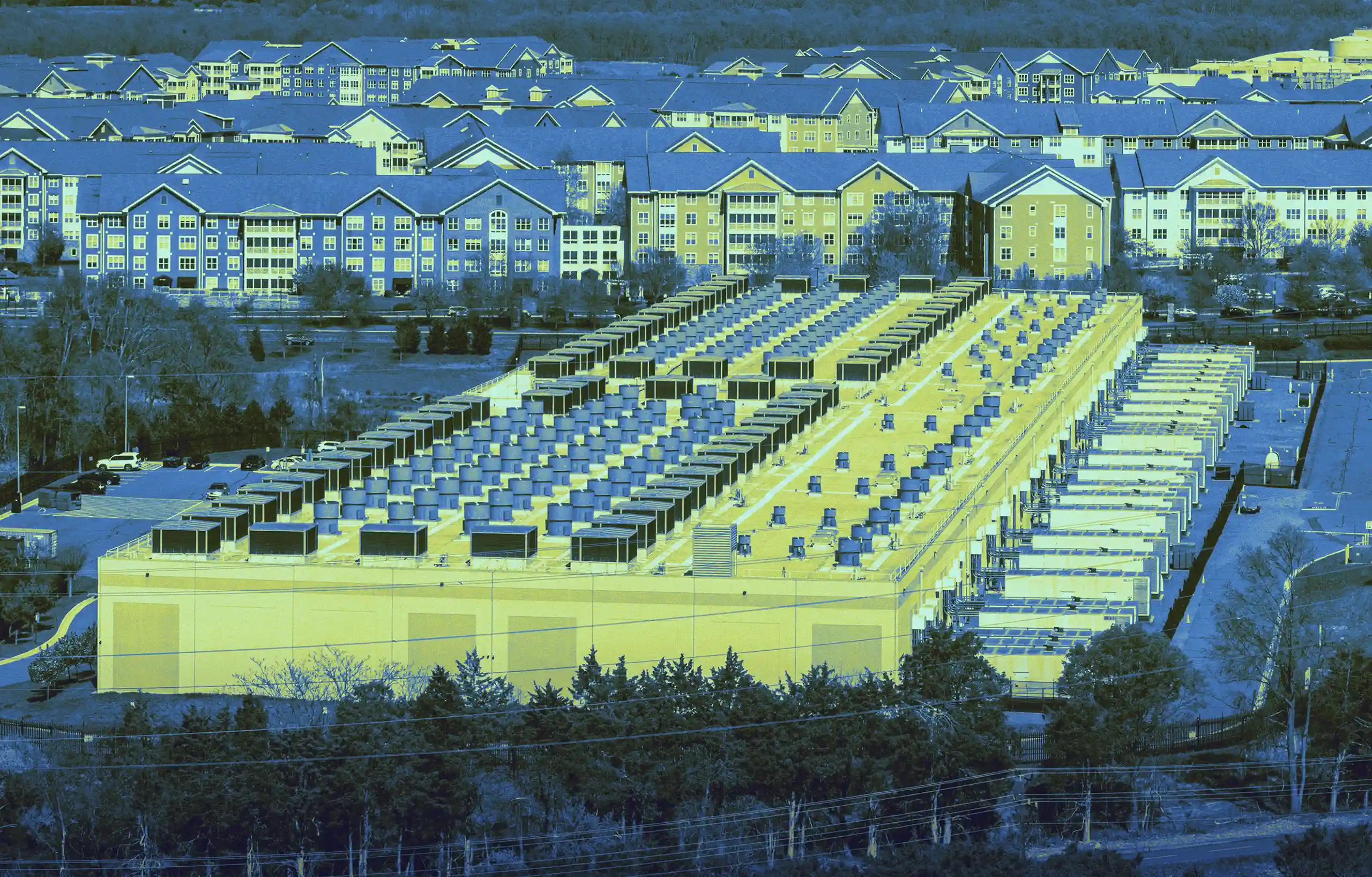
Local Interventions
This section maps out the possible local policy interventions to stop, slow, and restrict rampant data center development at the town, city, and county level. The interventions are generally ordered from what is most to least powerful to address locally, taking into account local versus state jurisdiction.
Due to differences in local and state laws, existing regulation, and political conditions, not every intervention will be feasible in every locality. What follows is intended as a menu of options that can then be analyzed in relation to local conditions.

Prohibit or Restrict Data Center Development
Towns, cities, and counties can issue ordinances that ban the construction of new data centers, prohibit the expansion of existing data centers, moratorium or restrict data center growth.
Note: Limiting or restricting data centers dovetails closely with zoning requirements, since many of the possible actions to directly limit or restrict where and how data centers can be built include limiting siting, setback rules, and distance requirements.
Strong example
Monterey Park, CA, passed an ordinance that banned all data center development in the city in the zoning code and amended the City General Plan to prohibit data centers citywide.
example
Nashville, TN, passed comprehensive data center regulations that establish multiple categories of data centers by megawatt capacity, prohibit data centers larger than 100MW, and subjects data centers proposals of 5MW to 100MW to increasingly strict requirements including a conditional use or special exception zoning application process, public hearings, and limiting developments to industrial zones.
Strong example
Data centers were banned in the Beltline Overlay District in Atlanta, Georgia.
Strong Example
Groton, Connecticut, instituted a ban on data centers larger than 12,500 square feet.
Enact a Temporary Pause on New Data Center Developments (Moratoriums)
Local governments can institute time-bound moratoriums on new data center approvals, usually to give the city or county time to update the municipal code, change zoning restrictions, or issue other regulations. This process may eventually lead to a ban, as was the case in Groton, Connecticut.
Moratoriums should last for at least 180 days to provide a meaningful opportunity for community notification and engagement and have clear requirements for the moratorium to be lifted such as the introduction of new or updated protections.
Strong example
Tonawanda, NY, passed a 12- month moratorium that prohibits new applications for data centers with peak demand of 20 megawatts or more.
Strong example
A 180-day moratorium on data centers was instituted in Coweta County, Georgia.
Strong Example
A one-year moratorium on data centers larger than 5,000 square feet was passed in Groton, Connecticut. The town later instituted a ban on data centers larger than 12,500 square feet.
Strong Example
A six-month moratorium was passed in September 2025 in Prince George’s County, Maryland, pausing new data center development.
Example
A 32-month data center moratorium was passed in Northampton County, North Carolina.
Reject Data Centers That Do Not Fit Within Locality’s Goals
Due to existing laws or political conditions, not every local government can ban the development of data centers outright. Instead, local governments can build in mechanisms throughout the data center approval process to reject data center applications that fail to comply with established city or county goals. These may include the locality’s
- water usage plan,
- energy usage plan,
- heat mitigation plan,
- economic development plan,
- environmental standards (such as air pollution and emissions),
- environmental justice goals,
- public health goals, and
- city equity plans.
Mechanisms to ensure that this process is feasible include the following:
Establish Goals Developed and Passed by Local Governments
A necessary precursor to the strategy of rejecting data center applications that fail to comply with local government goals is to have strong city or county goals. These goals must be developed in consultation with community members, and should center disadvantaged communities.
Strong example
Phoenix, Arizona’s 2050 Clean Air Goals exceed all federal air quality standards and aim to maintain a visibility of “good” or “excellent” on at least 90 percent of days.
Strong example
Monterey Park, CA, passed an ordinance by ballot initiative to amend the City General Plan to prohibit data centers citywide.
Independent Review by Experts with Decision-Making Authority
Ensure that each major stage of the approval process is reviewed independently.
Shift Burden to the Developer
The burden should be on the data center developer to prove how the project will fit within city goals and limits, with clear and transparent timelines, plans, and accountability measures. Failure to effectively demonstrate this should result in a rejection.
Establish Enforcement Mechanisms
Ensure that a city has the ability to enforce the agreements made throughout the approval process. Enforcement must occur after the data center is approved, at any point during development or implementation of the data center, and once the data center is in operation on a consistent basis. The local government must also create the ability to institute penalties that go beyond nominal fines, including revoking a data center’s permit or certificate of occupancy.
Note: The specific mechanisms for continued monitoring, enforcement, and penalties will depend on each component of the application and are outlined in each corresponding section below.
WEAK example
In Benton County, Arkansas, violation of the data center ordinance is punishable by a fine of $1,000. This is not a sufficient penalty for a billion-dollar company.
Establish Conditional Use Permitting for Data Centers
The most important requirement, especially for local governments that do not yet have data centers within their jurisdiction, is to create a separate conditional use permit approval process for data centers. Conditional use permits require developers to apply to the zoning board for permission to use their property in special ways. Approval is conditional, meaning developers must meet specific conditions set by the local government before they receive approval. Importantly, conditional permits can be revoked if conditions are not met throughout the lifespan of the property. There are three critical stages to consider in this process: pre-approval, approval, and post-approval.
Pre-Approval Transparency Mechanisms
Local governments must use the application process to demand as much transparency as possible.
Specify Minimum Transparency Requirements as Part of the Application Process
The minimum transparency requirements as part of the application process include, but are not limited to:
- water usage and mitigation;
- noise study and mitigation;
- energy usage and mitigation;
- on-site emissions;
- value of tax abatements developer is receiving for the project;
- name of all companies involved in data center project, including developer, shell companies, data center operators, and financers;
- jobs (short-term and permanent, hiring efforts, permanent employee wages); and
- a displacement and holistic environmental impact report, centering environmental justice considerations (such as those emerging from redlined/fenceline communities) that establishes the data center will not exacerbate the displacement of residents and local businesses.
Note: In some cases, data center developers are applying for permits without having tenants or end users in place. This can impede a city’s ability to demand transparency measures. Cities should reject any application that cannot account for the data center’s projected resource use or does not offer transparency into economic development terms.
Who Are the “End Users” of Data Centers?
A crucial part of the pre-approval application process is the requirement that data centers disclose the names of all companies involved in the data center project, including the developer, shell companies, data center operators, and financers.
However, many more companies are implicated in the development of data centers than those involved in the up-front development process. Once a data center is built, a data center operator sells services to many different companies. For example, a data center operated by Amazon hosts its cloud platform, Amazon Web Services (AWS). AWS sells cloud computing services to companies like Palantir1, a surveillance-technology company that has contracted with ICE since 20112. We might consider Palantir an “end user” of an Amazon data center because they use the data center’s services once it is built.
Because data centers can enable harmful use cases of AI technologies, data center ordinances, laws, and regulations should be passed hand in hand with AI regulations that ban harmful use cases and put critical accountability measures on the technology itself. See Protect Constituents from AI Harms for recommendations to ensure that data centers cannot be built in service of technology that harms communities.
Mandate Public Notice and Community Hearings
Require a minimum number of public community hearings as a central part of the approval process. Upon receipt of a data center application, the appropriate public administrator must add discussion of the data center application to the agenda of an upcoming regular meeting.
Ensure there is adequate advertisement for the hearing, including but not limited to publication in officially designated newspapers, social media, and certified mailings to all households within the approving government’s jurisdiction. Jurisdictions that depend on key resources (e.g., watershed and energy infrastructure) planning to be used by the data center should also be notified. Clearly display the time and place of the hearing in all communications.
Ensure that educational information is provided to residents well in advance of any hearing, with materials from independent assessments rather than developers. Engage in proactive outreach to community leaders, community groups, and residents of areas both next to the proposed site and that would be impacted more broadly by rate increases, pollution, or resource use.
Strong example
Tucson, Arizona, requires all documents related to data center projects to be public 90 days before any public meeting.
Reject Proposals Without Adequate Transparency Measures
Reject data center development or expansion proposals that do not have adequate transparency measures. Establish a waiting period before the rejected proposals can be submitted for reconsideration.
Strong example
Commissioners in Mooresville, North Carolina, refused to support a $30 billion data center project without knowing which company was behind it.
Strong Example
Rejected applications will not be considered within 24 months after denial in Atlanta, Georgia.
- “Palantir and AWS,” Palantir, https://www.palantir.com/partnerships/aws. ↩︎
- Caroline Haskins, “ICE Is Paying Palantir $30 Million to Build ‘ImmigrationOS’ Surveillance Platform,” Wired, April 18, 2025, https://www.wired.com/story/ice-palantir-immigrationos. ↩︎
Ban the Use of Nondisclosure Agreements in Data Center Development Deals
Nondisclosure agreements (NDAs) are secrecy contracts signed between a data center developer and local government(s) that prohibit the government from sharing information about the data center development deal with the broader public. These are widely used in data center development—in Virginia,1 25 out of 31 localities with an existing, approved, or proposed data center had an NDA—and impede the public’s ability to make informed decisions about their community. Local governments should pass an ordinance prohibiting the city from entering into NDAs with data center developers, and in some jurisdictions may consider a broader prohibition on NDAs in large economic development projects. Local governments can also approve formal policies preventing or restricting the use of NDAs, and can institute sunshine periods that require public release of documents related to the data center development.
In some cases, banning or restricting NDAs might be done at the state level.
Strong example
The board of trustees in Big Rapids Township, Michigan, approved a policy prohibiting employees and elected officials from signing NDAs around issues pertaining to the public interest or taxpayer funding.
Example
Supervisors in Pima County, Arizona, updated the county’s NDA policy to institute a 90-day sunshine period prior to approvals or votes by a county public body. During this period, all NDAs expire and public disclosure of all details are required.
- Eric Bonds and Viktor Newby, “Data Centers, Non-Disclosure Agreements and Democracy,” Virginia Mercury, April 30, 2025, https://virginiamercury.com/2025/04/30/data-centers-non-disclosure-agreements-and-democracy/?utm. ↩︎
Establish Conditional Use Permits
Revise the jurisdiction’s zoning code to establish conditional use permits as the mechanism to receive approval.
Set Distinct Class for Data Centers
By defining data centers as their own use class within zoning code, local governments can pass ordinances based on the unique characteristics of data centers. Without this step, data centers may fit within existing zoning laws that do not require special permits or applications (“by-right zoning”).
Define Data Centers
Define data centers in the most expansive possible way to avoid loopholes, currently and for future technological developments. Consider something like this:
“A facility, or portion of a facility, used or planned for use for the housing, operation, and/or co-location of computer and communication equipment and/or other associated components related to digital data operations for the purpose of storage, management, processing, and/or transmission of digital information.”
Note: This definition was written in reference to existing data center definitions.
- Reference from Atlanta, GA: “A facility engaged in the storage, management, processing, or transmission of digital data, which houses computer or network equipment, systems, servers, or appliances, and other associated components related to digital data operations.”
- Reference from Chandler, AZ: “A facility or portion of a facility housing networked computer systems and telecommunications equipment used for remote storage, processing, and distribution of data.”
- Reference from Londonderry, PA: “A facility used for the housing, operation, and/or co-location of computer and communication equipment for the purpose of storage, management, processing and/or transmission of digital information necessary for the operation of one of more business, commercial, or governmental entities.”
Should you define data centers as their own use class or within a broader industrial category?
Choosing how to define data centers in your permitting process matters. Some localities choose to decenter data center language by passing ordinances that capture data centers within a broader industrial category, such as “large-load customer” or “high-impact facility.”
Benefits of Defining Data Centers Within a Broader Category:
- For states facing preemption concerns or unable to pass data center-specific location, defining facilities by their resource use might be critical.
- Some tech companies and data center developers have argued that regulations targeting data centers specifically are discriminatory. If the regulation includes but is not specific to data centers, developers cannot argue that they are being singled out and discriminated against.
- “Large-load customers” is the term used at the federal level, so using this term provides consistency with federal regulations.
Drawbacks of Defining Data Centers Within a Broader Category:
- Defining data centers within a broader class such as “large-load customers” or “high-impact facility” will include other manufacturers and industrial customers; they may join forces to fight the regulation.
- A broader definition creates the possibility that data centers may find loopholes.
- Defining data centers by their resource use could create a loophole if data centers find efficiencies or creative ways to offload their resource use.
This will be a decision best made by those with specific knowledge of your jurisdiction.
No Permit Unless Approved
Currently in many jurisdictions, data center approvals are “by-right,” meaning that projects that meet zoning criteria are automatically approved without requiring special permits or additional review. This prevents local governments from attaching conditions to the permitting process. To mitigate this, local governments must stipulate that data center development and expansion are not permitted unless approved through the conditional use permitting process. This allows local governments to articulate the necessary requirements in order for data centers to receive approval, and to reject applications that don’t meet those requirements. This should include applications for existing data centers to expand (i.e., turning existing sites into hyperscalers).
Strong example
The city of Chandler, Arizona, stipulates that “data centers are not permitted to operate unless explicitly approved.”
Attach Binding Conditions on the Approval Process
The core mechanism of a conditional use permit is to condition the permit on the basis of clearly specified guidelines and requirements. These include:
- An approved water usage plan (for details on how to structure the strongest possible local water regulations, see Protect Water Resources)
- An approved energy-usage plan (for details on how to structure the strongest possible local energy regulations, see Regulate and Limit Energy Use)
- An approved noise-mitigation plan (for details on how to structure the strongest possible noise-mitigation measures, see Institute Strong Noise Mitigation Measures)
- Commitment to abide by zoning regulations (for details on how to structure the strongest possible zoning regulations, see Pass Zoning Ordinances and Municipal Code Amendments)
- A binding commitment to continued post-approval transparency requirements (for details, see the next point on Post-Approval Transparency Measures)
- A binding commitment to abide by job-quality standards and local, targeted hiring for construction and data center jobs (for details on the strongest labor conditions, see Establish Local Fair Labor Requirements)
- A displacement and holistic environmental impact report, centering environmental justice considerations (such as those emerging from redlined/fenceline communities) that establishes the data center will not exacerbate the displacement of residents and local businesses
- If called for by frontline communities, a binding commitment to enforce Community Benefits Agreements (for our perspective and cautions on this process, see Considerations for Community Benefits Agreements)
Post-Approval Transparency Measures
It is equally important to ensure there are continued transparency mechanisms in place after the approval process. Without these, effective enforcement of conditions in data center approvals and addressing harms from construction and operation will be more difficult.
Require Monthly Public Disclosure
Require data centers to give monthly reports on data centers’ water and electricity usage.
Additionally, data centers must report the results of noise studies; the amount of tax incentives received from local and state governments; the number of jobs created, including the wages and benefits offered to both construction and permanent employees; and the total amount of dollars invested into the community at minimum every year.
This information must be submitted to the local agency overseeing the permitting process to ensure compliance with the terms of the conditional permit. Information should also be reported to a state agency that gathers and discloses this information online. For more information about how states can track and publish these metrics online, see Establish a Statewide Clearinghouse. A state clearinghouse might not be politically feasible in all states.
Ensure Continued Community Involvement
The local government must establish mechanisms for continued community involvement, including a system of public reporting and a city response system to address community concerns. This should also include a post-approval hearing for additional transparency.
Establish Enforcement Mechanisms
Local governments must build out an enforcement mechanism to ensure that data centers abide by transparency requirements contingent upon approval. Jurisdictions must reserve the right to revoke the conditional use permit or remove the certificate of occupancy if conditions are not met. Additional penalties for violation of application terms can include non-nominal fines and civil penalties.
Note: Cities may have to amend their zoning code to increase the acceptable fines, and that cities may need to consult the legality of occupancy removal.
Pass Zoning Ordinances and Municipal Code Amendments
A key vehicle to limit or restrict data center development is to update the municipal code, often including zoning requirements, usage requirements, and other siting decisions. Through these mechanisms, local governments can dictate where and how data centers can be constructed. Local governments can take one or multiple approaches, including the following:
Specify Zoning Requirements
Site Data Centers in Industrial Zones Only
Local jurisdictions take different approaches to siting data centers through zoning regulations. Some jurisdictions establish Data Center Overlay districts, defining specific zones where data centers can be built and prohibiting them in other zones. Other jurisdictions specify if and where data centers fit into existing zoning districts.
Regardless of the approach, jurisdictions should specify that data centers can only be built in areas zoned for heavy industrial activity, or create an overlay district in industrial areas only. Local governments should prohibit data center construction in residential zones, agricultural areas, commercial areas, and light industry zones where office, residential, and commercial buildings can be constructed.
If a jurisdiction must allow the development of data centers in areas zoned for light or mixed-use industry, stricter requirements and specifications should apply to those areas.
Note: Restricting data centers to industrial zones does not fully mitigate their harmful community impact. A data center’s water and energy use impacts community resources regardless of where it is sited. Air pollution from industrial zones adversely affects surrounding communities, which is particularly concerning given that industrial zones are often sited next to Black and Brown neighborhoods, or other marginalized communities. Data centers have been built or are currently planned in the Frank C. Pigeon Industrial Park in Memphis, Tennessee; the Bellwether District in Philadelphia, Pennsylvania; and Kingsboro Industrial Park in Rocky Mount, North Carolina—all of which are located near historically Black communities.
Strong example
In Atlanta, Georgia, the city code was amended to stipulate that data centers shall be excluded from permissible use in the Industrial Mixed Use District (I-Mix) zoning district.
Strong Example
In Prince William County, Virginia, data centers are prohibited in agricultural districts.
Prohibit Variances and Special Use Permits
Variances allow zoning boards to approve use cases that are prohibited under existing zoning law, such as building height or minimum setback requirements. To receive a variance, the applicant must prove that they will suffer “hardship” without variance approval.1 Data center developers have petitioned2 zoning boards for variances from existing zoning regulations, such as restrictions on building heights, arguing that failure to provide a variance will lead to financial hardship. Consider prohibiting all applications for special use permits and variances for data center siting. If not prohibited, the threshold for data centers to apply for use variances to sidestep zoning applications should be exceedingly high.
Prohibit Data Centers in Commercial and Mixed-Use Zoning
This prohibition should be framed as a community health measure to ensure that communities are investing first and foremost in development that will sustain and nourish the community, including housing, grocery stores, and businesses that can bring long-term jobs into the community.
- Ryan Coffey, “Difference Between Special Use Permits and Variances,” Michigan State University Extension, March 22, 2013, https://www.canr.msu.edu/news/difference_between_special_use_permits_and_variances. ↩︎
- James Engel, “Springdale Zoning Hearing Board Considers Data Center Developer’s Requests,” TribLIVE, October 23, 2025, https://triblive.com/local/valley-news-dispatch/springdale-zoning-board-considers-data-center-developers-requests. ↩︎
Establish Setback Requirements
Cities should specify the minimum distances that data centers must be from property lines, streets, or specific types of areas (e.g., transit hubs).
Landscape Setbacks
Set minimum setback requirements for data centers.
Minimum Viable example
Phoenix, Arizona requires a 30-foot-wide perimeter landscape setback.
Sidewalks
Require data centers to build sidewalks over a minimum size and landscape strips with large canopy shade trees.
Distance from Residential Zones
If a city must permit data centers in a zoning district that abuts a residential zone, the city should require at the bare minimum 2,640 feet (one-half mile) between the data center and residential property line to minimize noise and air pollution.
Minimum Viable example
From Tempe, Arizona: “Data center buildings shall not be located within 500 feet of the property line of a site containing a residential use or a residential district.” Note: This is the strongest example among data center ordinances that have been passed, but is not sufficient to minimize harm.
Distance from Transit Hubs
Restrict data centers near transit hubs in order to prioritize mixed-use development such as employment centers, healthcare facilities, grocery stores, and meaningful community services. At least 2,640 feet (one-half mile) should be the floor.
Minimum Viable Example
In Atlanta, Georgia, data centers are prohibited from being built within 2,640 feet (one-half mile) from high-capacity transit stops.
Minimum Viable Example
In Phoenix, Arizona, data center development shall be no closer than 2,640 feet (one-half mile) from an approved high-capacity transit station.
Specify Design Requirements
Without aesthetic specifications, data centers tend to default to large and unwelcoming concrete buildings. The following requirements can help mitigate this default design.
Facade and Principal Building Requirements
Cities can specify requirements for aesthetic elements of data centers and require data centers to incorporate specific design principles, such as changes in building height, building step-backs or recesses, windows, and use of accent materials.
Strong example
The city of Phoenix, Arizona, specifies that building facades must contain architectural embellishments such as textural changes, pilasters, offsets, windows, and overheads/canopies. Buildings should include variations in colors, materials, patterns, and heights.
Shielding Mechanical Equipment from View
Data centers should screen and shield mechanical equipment so it is not visible.
Strong Example
In Prince William County, Virginia, data centers are required to screen all ground-level and rooftop mechanical equipment from view.
Establish Landscape Requirements
Local governments can require pathways, open green space on property lines, vegetation, and specific types of fencing. (Chain-link and barbed-wire fencing may be prohibited, for instance.)
Strong example
Phoenix, Arizona, requires two rows of large canopy shade trees, shrubs, and ground cover to mitigate the negative visual impact of data centers.
Strong Example
Prince William County, Virginia, specifies fencing requirements for data centers, stipulating that fences cannot be chain-link or barbed-wire.
Limit Building Conversion
Limit buildings that can be converted into data centers to prioritize other building use cases, such as housing.
Strong example
Atlanta, Georgia, stipulates that only buildings more than 50 years old may be converted.
Cautionary Example
The Houston Funplex, a landmark community center in Houston, Texas, was purchased by a private developer amid speculation that it may be converted into a data center.
Require Green Building Standards
Localities should mandate that data centers be built utilizing green building standards such as LEED,1 ISO 14001,2 or ISO 50001.3
Strong example
Minnesota introduced HF 4929, requiring certification for sustainable design or green building standards within three years of construction.
- USGBC, “LEED Rating System,” USGBC, accessed December 2, 2025, https://www.usgbc.org/leed. ↩︎
- ISO, ISO 14001:2015 – Environmental Management Systems — Requirements with Guidance for Use, 2015, https://www.iso.org/standard/60857.html. ↩︎
- ISO, “ISO 50001– Energy Management,” ISO, accessed December 2, 2025, https://www.iso.org/iso-50001-energy-management.html. ↩︎
Prohibit Rezoning Processes That Threaten Historic Sites
Localities eager to bring economic development to their communities, including data centers, often have endangered historic sites. Localities must prohibit the rezoning of land near historically significant sites for the purposes of building data centers.
Strong example
Thirty-seven data centers have been proposed near Manassas National Battlefield Park in Prince William County, Virginia, which involves rezoning 1,700 acres of homes and farms. Local communities sued the county for providing limited required information about the development, inadequate public notice and hearings, and failure to consider key environmental and historical facts. The judge overturned the rezoning decision because the county failed to make the development plans, ordinances, or amendments referenced in the public notices available to the public.
Example
In the spring of 2023, Orange County, Virginia, approved the rezoning of Wilderness Battlefield into industrial districts. The Wilderness Battlefield is a top endangered historic site that contains significant Civil War battlefield sites. Local communities and civil societies sued the county, arguing that the decision violated Virginia law governing rezoning processes, public hearings, and equal taxation of land. The lawsuit is ongoing.
Cautionary Example
Two historic Black cemeteries in Prince William County, Virginia, were destroyed by the construction of a new data center, despite the county’s required 25-foot buffer to protect cemeteries.
Prohibit Rezoning Processes That Transform Agricultural Districts into Data Center Developments
Data center developers are purchasing large swaths of land with the intention of rezoning agricultural districts into industrial zones. Communities must protect against this by prohibiting rezoning that transforms farmland into data center developments. To counter pressure to sell, communities can invest in farmland preservation funds.
example
In September 2025, the Township Board in Saline County, Michigan, voted four to one against rezoning 575 acres of farmland into land suitable for a data center development. Immediately following the vote, the developer filed a lawsuit accusing the township of exclusionary zoning. A settlement agreement includes provisions specifying the project will use only 250 acres of farmland, preserving the remaining land as undeveloped or agricultural lands. There are also provisions requiring the developer to restore the land as a natural area with a decommissioning fund if the data center is decommissioned, as well as $14 million given to the community for farmland preservation, community investment, and fire services.
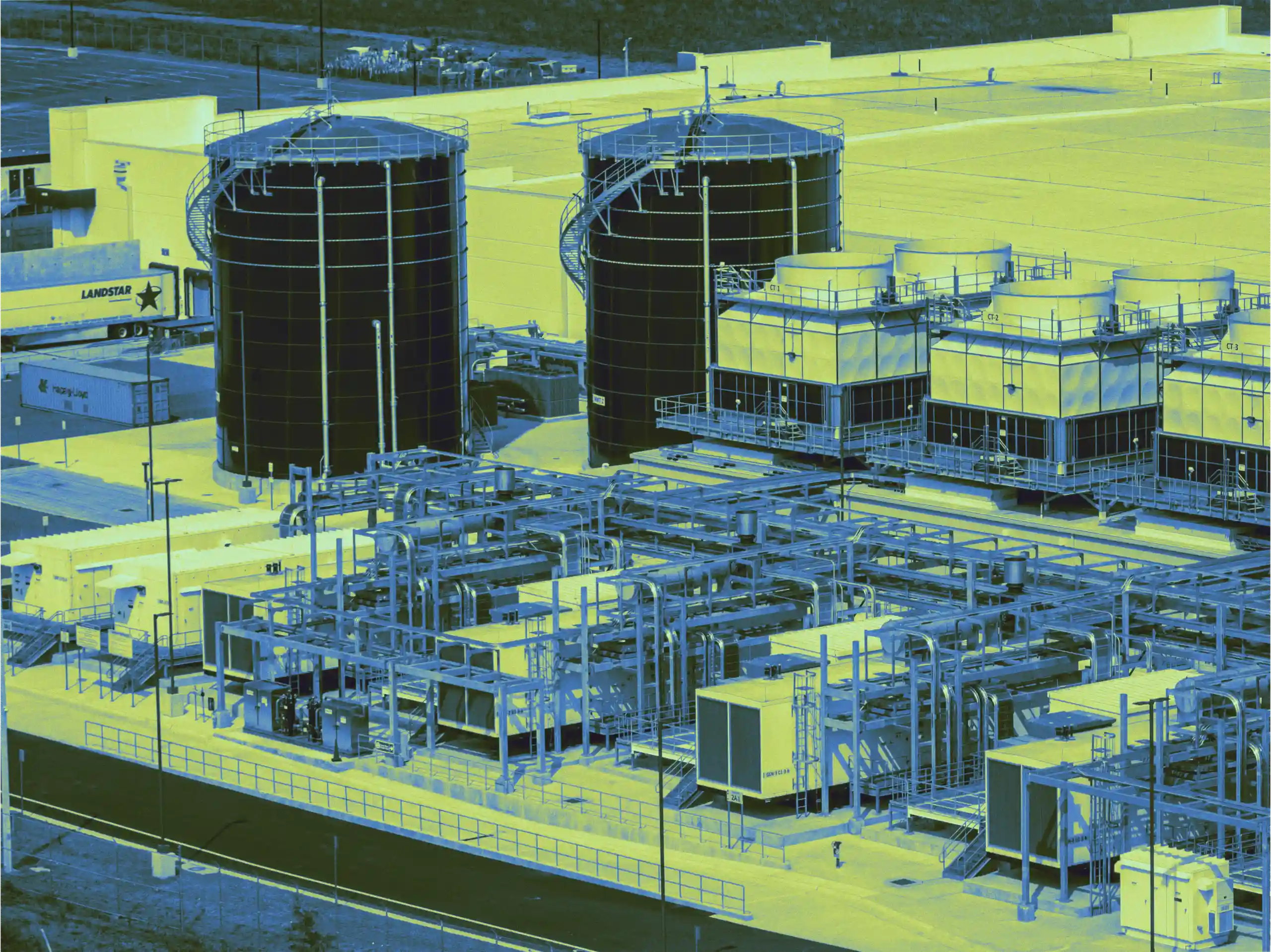
Institute Strong Noise-Mitigation Measures
Local governments must institute strong noise-mitigation measures to protect residents from the noise emitted from data centers. These measures are implemented through zoning ordinances. They include the following:
Require Sound-Modeling Studies
Require developers to complete a noise study and mitigation plan as part of the approval process. Require that sound studies account for impulse noise, continuous noise, and low-frequency noise levels, as well as for noise coming from emergency diesel generators. Require that studies be conducted during peak operations and include times when generators are running.
Set Permissible Noise Levels
Set the lowest possible threshold for continuous noise. The ordinance currently with the lowest thresholds, from Divide County, North Dakota, establishes that the maximum continuous sound levels for data centers cannot exceed 50 dBA during the daytime and 45 dBA at night. These thresholds should include low-frequency noise levels and noise coming from ancillary data center usage (such as emergency diesel generators and construction). Thresholds may vary depending on zoning (for example, if a data center abuts a residential zone).
Note: The National Institute for Occupational Safety and Health (NIOSH) threshold for requiring hearing protection is 85 dbA over eight hours. Noise around data centers can reach up to 92 dBa.
Strong example
Divide County, North Dakota, establishes the maximum continuous sound level for data centers during the daytime as 50 dBA, and 45 dBA at night.
Strong Example
Marana, Arizona, stipulates that maximum sound levels for data centers cannot exceed 55 dBA in residential and mixed-use properties during both daytime and nighttime.
Example
Phoenix, Arizona, and McPherson County, South Dakota, stipulate that noise levels cannot exceed 55 dBA during the day and 45 dBA from 10 p.m. to 7 a.m. for data centers abutting residential zones.
Weak Example
Coweta County, Georgia, stipulates that noise levels for data centers cannot exceed 5 dBA above ambient from 10 p.m. to 7 a.m., or 10 dBA above ambient from 7 a.m. to 10 p.m. Per the ordinance, the county will conduct an ambient noise survey. This strategy creates the risk that minimum thresholds could be set higher than recommended.
Require Noise-Mitigation Measures
Require data centers to undergo mitigation measures to reduce noise pollution.
example
Tempe, Arizona, requires that “generators for data centers shall be located within an enclosed building with necessary ventilation to reduce impacts on noise to surrounding area.”
Establish Enforcement Mechanisms
The local government must build out an enforcement mechanism to ensure that data centers abide by noise regulations, including a complaint process for residents and regular monitoring. Some cities have recommended that a specially trained public works unit enforce the new noise ordinance. Penalties should involve non-nominal fines and civil penalties, including removal of the certificate of occupancy.
Note: Cities may have to amend their zoning code to increase the acceptable fines, and may need to ascertain the legality of occupancy removal.
Weak example
In Prince William County, Virginia, the penalty for repeated violations of a noise ordinance tops out at $5,000. This is not a sufficient penalty for a billion-dollar company.
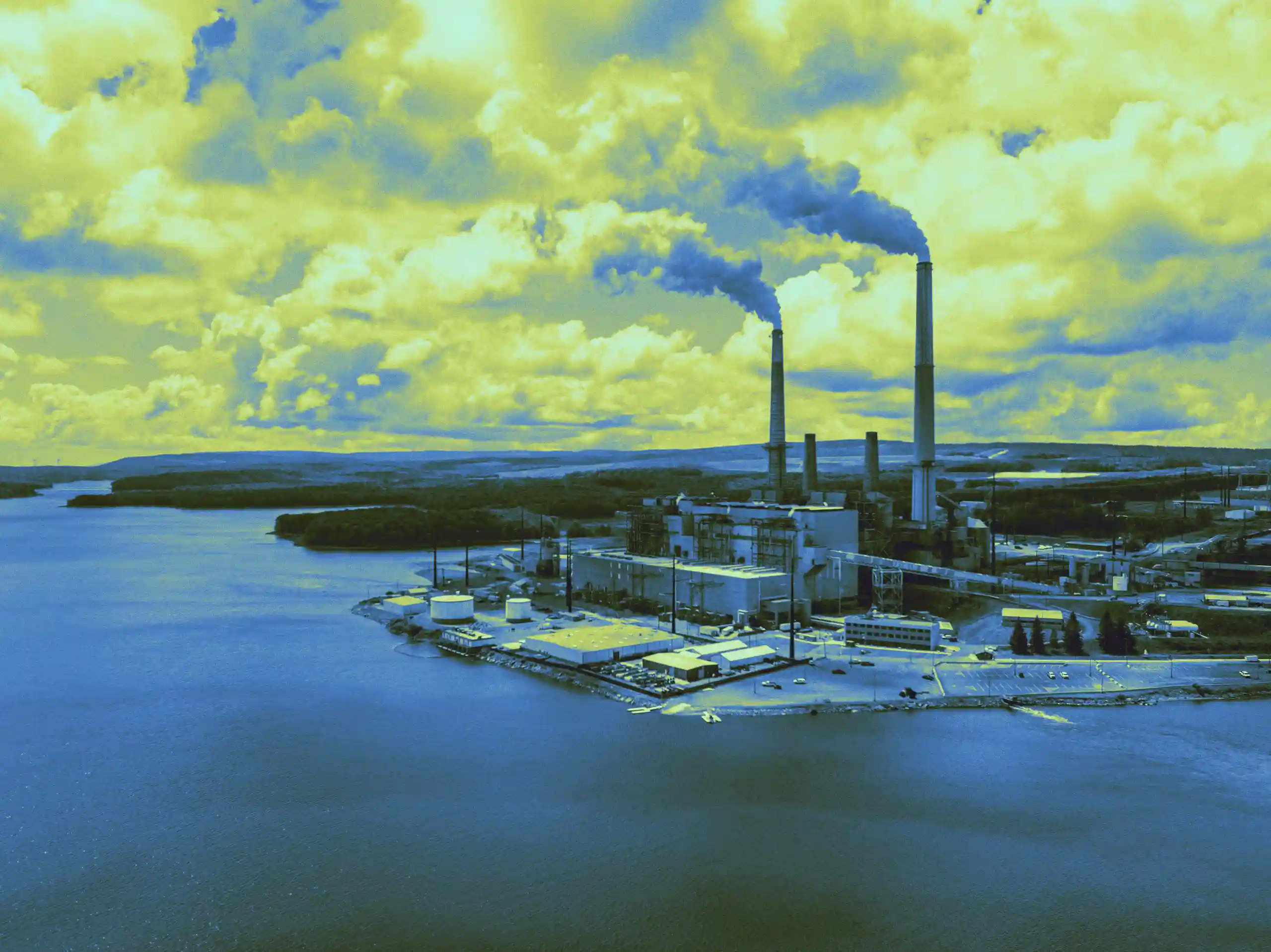
Protect Water Resources
Data centers use significant amounts of water resources. This is particularly troubling as tech companies increasingly plan to build data centers in water-scarce locations.1 Local governments must pass water ordinances that limit the impacts of data centers and restrict data center development when proposals do not work in the community’s best interest.
- Luke Barratt, “Revealed: Big Tech’s New Datacentres Will Take Water from the World’s Driest Areas,” Guardian, April 9, 2025, https://www.theguardian.com/environment/2025/apr/09/big-tech-datacentres-water. ↩︎
Define Large-Quantity Water Users
Large-quantity water users should be defined as those whose water use equals or exceeds 10,000 centum cubic feet (ccf), equivalent to 7,480,000 gallons per month.
To give a Benchmark:
Project Blue, an Amazon hyperscaler data center in Tucson, Arizona, publicly projected they would use an average of 283 million gallons of water per year. (This equates to approximately 23 million gallons, or 31,000 ccf, per month.) This calculation suggests that 10,000 ccf per month would capture hyperscaler data centers.
Establish Application Process for Large-Quantity Water Users
Require all large-quantity water users to submit an application for substantial water usage. Cities must reserve the right to determine that the applicant’s use would be incompatible with the city’s available resources and reject the application. Data centers should be presumed rejected unless the developer is able to prove robust and effective water-sustainability measures.
Strong example
Aurora, Colorado, stipulates that high-water-use industries projecting consumptive water demands above certain thresholds cannot be developed unless water sustainability measures are taken.1
Require Comprehensive Accounting of Projected Water Usage
Applications must include the data center’s projected water usage. Applicants must be required to account for all water uses, including water used in data center construction, server cooling, facility cooling (including cooling towers), and other ancillary water uses. Most data center projections currently do not account for the water facilities will use to cool their infrastructure (including server cooling and facility cooling), which consumes a significant amount of water,1 as well as construction.
example
Illinois proposed SB 2181, requiring annual water consumption reporting for data centers broken out by month. The bill specifically calls out that water used for cooling must be included. (“‘Water consumption’ means the total amount of water consumed by a data center, including water used for cooling, measured in gallons.”)
Weak Example
California AB 93 (signed into law) mandates that new data centers must provide an estimate of their expected water use when applying for a city or county license. However, the legislation does not specify that all water uses must be included in this report, creating a loophole to exclude water used for cooling, construction, or other ancillary use cases.
- Pengfei Li et al., “Making AI Less ‘Thirsty’: Uncovering and Addressing the Secret Water Footprint of AI Models,” arXiv, March 26, 2025, https://arxiv.org/pdf/2304.03271. ↩︎
Require Comprehensive Accounting of Projected Water Sources
Increasingly, data centers are tapping into freshwater resources. Applicants must specify their water footprint, including blue sources (surface water and groundwater), piped sources (municipal water), and gray sources (purified reclaimed water). For blue sources, data centers must break down their expected sourcing of surface water and groundwater.1
- Miguel Yañez-Barnuevo, Data Centers and Water Consumption, Environmental and Energy Study Institute, June 25, 2025, https://www.eesi.org/articles/view/data-centers-and-water-consumption. ↩︎
Require Submission of a Water-Conservation Plan
Large-quantity water users must submit a water-conservation plan. Require independent review to evaluate whether the water-conservation plan will reduce the consumption of water, over what time period, and the impact this will have on residents and the environment. Options include the following:
Water Efficiency Measures
Require data centers to minimize water demand through efficiency measures such as efficient airflow to reduce overall cooling needs, closed-loop cooling systems, and immersion cooling.
Water Replacement
Ordinance must specify that water should be fully replaced. The water replacement should benefit the watershed that blue sources are being drawn from.
Recycled Water Offset Requirements
Require large-quantity water users that consume on average more than 100,000 gallons of water per day for at least five days out of the year to offset their use by using recycled or conserved water for at least 50 percent of their water demand.
Minimum viable example
Phoenix, Arizona, requires large-quantity water users that consume more than 500,000 gallons of water per day to offset this by using recycled or conserved water for 30 percent of their water demand.
Note: Cities can require data centers to invest in infrastructure to meet recycled water requirements. This requirement will depend on a jurisdiction’s recycled water-treatment facilities, infrastructure, and goals.
Specify Requirements Around Liquid Cooling Versus Evaporative Air Cooling
Data centers in water-scarce areas may consider prohibiting evaporative air cooling techniques. This is because cooling data centers is extraordinarily resource intensive. There are generally two ways data centers can cool their servers: server liquid cooling (a process that delivers a liquid coolant directly to the graphics processing units, and that does not consume water) and air cooling (which uses water evaporation and is therefore a more water-intensive method). Some data centers also use cooling towers to cool their facilities; this method is very resource-intensive. While technology may change over time, cities should first assess whether data centers are worth the resource extraction required.1
Note: This distinction is not intuitive! Liquid cooling techniques use little to no water, and air cooling techniques use significant amounts of water.
Strong example
The Southern Nevada Water Authority adopted a moratorium on new evaporative cooling systems in commercial and industrial buildings because they are highly water intensive.
- Yañez-Barnuevo, Data Centers and Water Consumption. ↩︎
Require Data Centers to Pay for All Upfront Infrastructure Costs Related to Their Water Usage
While certain jurisdictions may have the necessary water infrastructure in place to service large-quantity water customers such as data centers, other jurisdictions may need to extend water and sewer infrastructure to serve new customers. Public utilities often pass these costs onto ratepayers, which can lead to higher water bills. This is particularly relevant for rural communities, where existing water infrastructure may be lacking.
Cities must demand that each data center pay 100 percent of estimated public infrastructure costs related to its water usage, with a particular focus on infrastructure upgrades needed to support the data center. This can be done through an annual Infrastructure Impact Fee deposited into a restricted fund used for local water infrastructure, conservation, and drought resilience projects.1
- Thanks to the Southeast Climate and Energy Network for crafting this policy recommendation. ↩︎
Require Water-Quality Testing and Reporting
Require that data centers test and publicly report water quality to ensure it remains safe, with a binding commitment to cleaning it up if it is not.
Strong example
The Cheyenne, WY, Board of Public Utilities “immediately and permanently” revoked industrial discharge privileges from a Meta data center development after the water authority traced the source of a dangerous and unusual bacterium in the wastewater to the data center.
Require Continued Transparency Mechanisms
Require that water consumption numbers and sourcing be made public in monthly reporting. Without transparency, effective enforcement of approvals based on water use and addressing harms will be more difficult. Reporting should include the following:
- Average monthly water usage, including cooling and ancillary uses
- Water-conservation-plan reporting
- An assessment of whether water demands require tapping surface or groundwater
- An assessment of whether potable water will be used
This information must be submitted to the local agency overseeing the permitting process to ensure compliance with the terms of the conditional permit. Information should also be reported to a state agency that gathers and discloses this information online. For more information about how states can track and publish these metrics online, see Establish a Statewide Clearinghouse.
Ensure Water Applications and Plans Are a Matter of Public Record
Ensure that the water-service applications and water-conservation plan are public records subject to disclosure under the state’s public records law. Stipulate that this information does not constitute a trade secret subject to exemption from disclosure.
Levy Mandatory Taxes on Water Use
Tax the water usage with no exemptions, and increase the daily rate during droughts. Require that money be funneled into either water conservation projects or local infrastructure.
Weak example
Corpus Christi, Texas, taxes water usage, but only in droughts with opt-out provisions for large-volume industrial customers. This would allow data centers to opt out of drought surcharge fees and undermine the mitigation tactic.
Establish Strong Enforcement Mechanisms for Violations
The large-quantity water user must not voluntarily pledge to have a water-conservation plan, but actually enact it. Water-conservation plans must be legally binding. The city must build in enforcement mechanisms to enforce water usage and water-conservation plans. To implement the strongest penalty, water service should be shut off for violations. Nominal fines for violating a water permit mean nothing to hyperscale data centers.
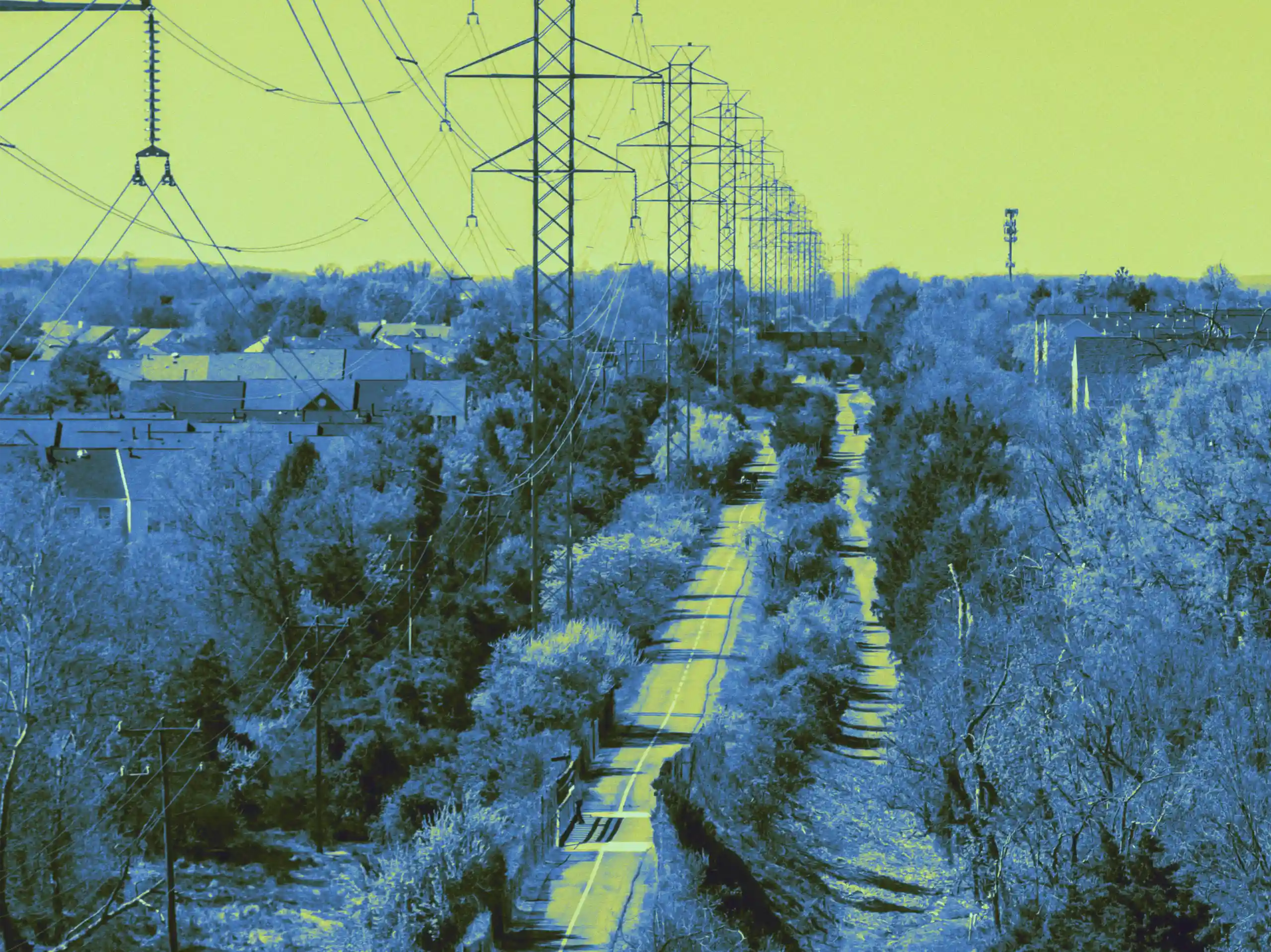
Regulate and Limit Energy Use
The amount of energy that data centers are projected to use is staggering. This escalating projected demand threatens to destabilize fragile energy grids, increase air pollution, and increase energy bills for everyday people. Local governments are empowered to pass ordinances limiting the harmful effects of this rapid energy rollout while rejecting proposals that do not work in the community’s best interest.
Note: The bulk of regulations designed to protect ratepayers from subsidizing the costs of data centers, mitigate the financial risk from data centers, and promote grid stability are best done at the state level. See Establish Strong Ratepayer Protections and Promote Grid Stability and Accelerate Renewable Energy Infrastructure for more.
Mandate 24/7 Renewable Energy Requirements
Require that data centers procure or subscribe to locally deliverable, additional, and zero-emissions renewable energy at all hours of the day, every day of the year, as a condition for receiving approval.1 “Additional” is an important requirement to ensure that data centers do not take energy away from another project that would have used the available renewable energy to decarbonize.
- Thanks to Sierra Club for this language. For more details, see Sierra Club, “State Policies to Migitate Data Centers,” January 2025, https://docs.google.com/document/d/1ECA47CaiLwaL0STaon7Ng4O2i-Etd6E2mPfhqp-30TI/. ↩︎
Prohibit Off-Grid and “Behind-the-Meter” Power Generation
Because local electrical grids have struggled to produce enough power for data center demand, data centers have searched for “behind-the-meter” solutions for power, including gas generation and nuclear power. This enables data centers to plug directly into independently provided power, sidestepping investments in energy infrastructure.
If feasible within your jurisdiction, localities should ban these power work-arounds, ensuring that data centers are only approved if and where local electric grids can support the data center demand without threatening grid reliability.
Data centers able to bring their own renewable power, such as solar, may receive an exemption to limitations on “behind-the-meter” power. However, localities should scrutinize commitments from developers to bring their own renewable power, as these commitments often fail to sufficiently materialize in time (or at all). Critically, if the data center is not entirely self-supported by its power generation and is interconnected with the electrical grid, the data center must appropriately pay for the services it receives.
example
Ohio SB 2 (proposed) specifies that utility companies will not be responsible for costs associated with supplying behind-the-meter electric generation services.
Prohibit Backup Diesel Generators
Some data centers install backup generators, often diesel, to provide power in the event of power outages. Localities should prohibit data centers from running on-site diesel generators. For more details, see the section on Air Pollution and Community Health Measures.
Require Capacity Commitments and “Will Serve” Letters
As a condition for receiving approval, developers must provide a contractual agreement with the local utility company affirming that the local utility company has existing capacity to meet the energy demand of the data center. These “will serve” letters should also include information on whether the utility anticipates needing to invest in additional generation resources and infrastructure to serve the data center.
Levy Mandatory Taxes on Electricity Use
Many sales and use-tax exemptions for data centers include exemptions on power purchases. Where localities are not preempted by state law, localities should tax all electricity use with no exemptions, increase the daily rate during energy emergencies (e.g., heatwaves), and require that a portion of tax be funneled into local projects and energy infrastructure.
Establish Continued Energy Transparency Mechanisms as a Condition of Approval
Require that development projects make all electricity use public in monthly reporting, including whether or not a data center exceeds the energy capacity detailed in the will serve letter. This information must be submitted to the local agency overseeing the permitting process to ensure compliance with the terms of the conditional permit. Information should also be reported to a state agency that gathers and discloses this information online. For more information about how states can track and publish these metrics online, see Establish a Statewide Clearinghouse.
Retain the Right to Curb or Shut Down Energy During Citywide Emergencies
Local governments should institute a binding clause into the energy approval process stating that the city retains the power to curb or temporarily shut down a data center’s energy to prevent disruptions in continuous service for residential, citywide needs in the event of an emergency (e.g., heatwave).
Note: Cities may need to coordinate with utilities or state-run public utility commissions in order to retain this right.
Strong example
A bipartisan coalition of state legislators representing ratepayers across the PJM region (an area covering electricity for all or parts of Delaware, Illinois, Indiana, Kentucky, Maryland, Michigan, New Jersey, North Carolina, Ohio, Pennsylvania, Tennessee, Virginia, West Virginia, and the District of Columbia) submitted a proposal demanding that data centers joining PJM’s grid will be subject to interruptible service, meaning that PJM can force data centers to stop using electricity during times of peak demand. Tech companies have pushed back.
Establish Strong Enforcement Mechanisms for Violations
Build in enforcement mechanisms for local governments to hold data centers liable for exceeding energy thresholds noted in the will serve letter. Remember that nominal fines for violations mean nothing to hyperscale data centers.
WEAK example
Phoenix, Arizona, requires will serve letters, but does not have a mechanism to ensure compliance once the data center is in operation.
Repeal or Limit Tax Incentives and Subsidies
Sales and use-tax exemptions for data centers are often granted at the state level. This strips valuable tax money away from communities—especially public schools, since property taxes remain the largest source of K-12 funding. Because data centers are so extremely capital-intensive, exempting them from the corporate personal property tax is a very lucrative subsidy.1
Local governments must protect against this extraction through the following actions:
- For a comprehensive overview of how data center subsidies undermine state budgets, see LeRoy and Tarczynska, Cloudy With a Loss of Spending Control. ↩︎
Repeal or Limit Corporate Tax Exemptions
Cities may consider limiting or banning corporate tax subsidies for data centers, especially as such restrictions relate to local property and sales taxes.
If they have to be granted, local property-tax abatements should be short-term (research suggests not longer than three years1) and should grant no more than 50 percent abatement of tangible and intangible property. Before granting any tax breaks, local officials should commission or perform independent return-on-investment or cost-benefit analysis of proposed incentives. Those studies should be available for public inspection at minimum 90 days ahead of incentive approval.
Note: State-level sales and use-tax exemptions abate both state and local sales tax portions. Localities must consult state law to determine any preemption concerns or conflicts.
Strong example
Pima County Board of Supervisors voted to lobby against Arizona sales tax exemptions for data centers.
- Timothy J. Bartik, “Rethinking State Economic Development Strategies: Or, How to Maximize Benefits for State Residents’ Earnings per Capita,” W. E. Upjohn Institute for Employment Research, December 18, 2019, https://research.upjohn.org/cgi/viewcontent.cgi?article=1062&context=presentations. ↩︎
Require Job Quality Standards and Local, Targeted Hiring for Construction and Data Center Jobs
As a condition of tax breaks, localities, when there is no conflict with law, can require companies to abide by strong labor conditions. See Establish Local Fair Labor Requirements to learn more, including the limitations of labor requirements given that data centers are not significant job creators.
Do Not Abate School Taxes
Property taxes are the largest single source of revenue for K-12 education, so localities should ideally prohibit abatements of property taxes that funnel into schools. At minimum, where there is no conflict with state law, localities should give school districts the power to opt in or out of any abatement deal, for a negotiated duration and percent.
Weak (cautionary) example
In 2024, Morrow School District 1 in Oregon lost $18 million because of tax breaks granted to Amazon data centers located in the district.
Speak Out Against State Tax Breaks
Because sales and use-tax exemptions for data centers are enacted at the state level, local community leaders can and should speak out against these tax breaks given that they pull valuable money away from communities. The state-enacted sales and use-tax exemptions abate both state and local portions of the tax, effectively preempting local control.
Strong example
Kate Gallego, the mayor of Phoenix, Arizona, has spoken out against Arizona’s tax exemption laws.
Strong Example
A council member of St. Joseph County, Indiana, opposed the vote for a large subsidy package for an Amazon Web Services (AWS) data center.
Institute Aggressive Taxation on Hyperscaler Data Centers
Where legal, jurisdictions may consider instituting taxes on data centers or peripherals.
Strong example
Prince William County, Virginia, raised the tax for “computer and peripherals” from $2.15 per $100 in assessed value to $3.70 (a 72 percent increase). Note: This tax applies to all businesses; it is not a separate tax for data centers. Other counties like Manassas, Virginia, considered a similar 67 percent tax increase on peripherals.
Strong Example
In 2025, Henrico County, Virginia, passed a 550 percent increase in tax on data center computers and related equipment (from $0.40 per $100 of assessed value to $2.60).
Use Fees to Invest in Communities
If a company pays a fee rather than taxes to a local jurisdiction (for example, “payments in lieu of taxes,” also known as PILOT agreements) demand that revenue be invested directly into the community, including housing, renewable energy infrastructure, broadband, and schools.
Note: Revenue generated from PILOT agreements is significantly less than what would be generated from full taxation, so local governments should force data centers to pay fair taxes and deprioritize PILOT programs.
Practice Full Disclosure
Report at least annually to the public the name of the subsidized company, the amount and type of tax breaks each project is getting, the number of jobs created, and wages paid to workers by job type, as well as the total amounts of property tax and local portion of the sales tax abated for all projects.
Strong example
Most school districts are required to disclose these measures under Statement No. 77 of the Governmental Accounting Standards Board.

Implement Air Pollution and Community Health Measures
Data centers are significant producers of carbon emissions, which threaten the health of local communities. Local governments must protect community members from the harmful and irreversible effects of data centers, including degraded air quality and worsening quality of community life.
Prohibit Backup Diesel Generators
Some data centers are installing backup generators, often diesel, to provide power in the event of power outages. Localities should prohibit data centers from running on-site diesel generators. Localities should also protect against developer work-arounds, such as developers acquiring permits from adjacent jurisdictions.
If it is necessary to enable data centers to provide backup power generation, the following measures should be taken:
Notification
Communities must be notified when backup generators are being used or tested.
Permit Control
Permits for backup generators must be strictly controlled and regulated through a local agency, such as the local health department. Compliance must be routinely investigated and violators should have their permits revoked.
Require Pollution Control Equipment
Require data center operators to install pollution control equipment on all back-up generators.
Jurisdiction Requirements
Specify that permits from other localities are not valid.
Cumulative Impact Reporting
Require permitting decisions to consider existing air-pollution burdens and determine whether the addition of another source will exacerbate these impacts to an unacceptable degree.
Strong example
Colorado’s Energy and Carbon Management Commission rules require oil and gas operators to consider cumulative impacts when applying for permits.
Prohibit Exemptions from Emissions Standards
Prohibit data center applications from requesting an exemption of the state’s emission rules.
Note: If localities cannot legally prohibit exemptions from state emissions regulations, they should speak out against this practice.
Strong (state) example
Maryland Public Service Commission (PSC) rejected a data center application’s request for an exemption from the state’s emission rules.
Prohibit Data Centers in Commercial and Mixed-Use Zoning
This prohibition should be framed as a community health measure to ensure that communities are investing first and foremost in development that will sustain and nourish the community, including housing, grocery stores, and businesses that can bring long-term jobs into the community.
Require Fenceline Air Quality Monitoring
Require the installation and use of best-in-class technology to continuously monitor air quality, surface water quality and groundwater quality at facility boundaries for air pollutants, thermal impacts, salinity, cooling-system chemicals, and metals.
Establish Local Fair Labor Requirements
Note: Data centers are not significant job creators and many of the promised jobs tend to be temporary construction positions or low-paid, temporary, subcontracted data center operations roles. Establishing fair labor requirements could offset some harm, but would not address the underlying reality.
Provide High-Quality, Stable, and Local Jobs
Localities should ensure that the limited jobs that data centers provide are high-quality, stable, and local.
Hiring
Localities should require data centers to hire full-time data center staff from the local population or partner with community organizations on first-source hiring programs. These employees should be directly employed by the data center operator and not hired as subcontractors. For construction jobs, localities should demand project labor agreements with a commitment that construction projects will employ local building trade union workers. Localities may also require prioritizing the hiring of underrepresented groups in specific industries or labor markets—such as women in construction or veterans.
Wages
Jobs should pay, at a minimum, a living wage adjusted annually for inflation. Ideally, wages should align with market-based standards tied to the state or regional median wage for the data center industry. There must be pay equity for equal work between contractors and the data center company’s own employees.
Benefits
Employers should be required to provide health insurance and cover at least 50 percent of the premium cost for each worker. Localities should also demand that data centers provide child care to all workers.
Health, Safety, and Well-being
Localities should regulate working conditions, including ensuring there is an adequate break room with strong health and safety standards.
Transparency
Localities should require data centers to give annual reports on labor demographic data, including number of full-time employees, subcontractors, and temporary workers. Include demographics such as race, gender identity, sexual orientation, education level, and pay and benefits data for each represented group. Include client overhead cost for the bill-rate per headcount of subcontracted worker, organized by job title.
Enshrine Local Labor Demands into Law
There are four pathways that local policymakers can take to enshrine these demands into law.
Pass a County Labor Ordinance
Where it does not conflict with state or federal law, cities can pass labor ordinances codifying these provisions into law. This is the strongest possible vehicle because it would apply to all workers in a jurisdiction.
Require Job-Quality Standards as a Condition on Permitting Approval
As a next-best step, localities should condition permitting on data center proposals abiding by strong labor standards. Crucially, these must be legally binding and include a clawback provision that specifies failure to meet the agreed-upon standards will result in the revocation of the permit and certificate of occupancy. See Establish Conditional Use Permitting for Data Centers for more details.
Require Job-Quality Standards as a Condition of Tax Breaks or Subsidies
If attaching labor conditions to the conditional permitting process is not possible, localities can attach labor conditions to tax breaks where there is no conflict with state law. Note: This is less preferable to permitting because localities should repeal tax breaks for data centers. These must be legally binding and include a clawback provision that specifies failure to meet the agreed-upon standards will require repayment. See Repeal or Limit Tax Incentives and Subsidies for more details.
Institute Legally Binding Community Benefits Agreements
Labor conditions can also be attached to community benefits agreements (CBAs). This is the least preferable vehicle because CBAs are limited in scope and do not apply to all data center development projects within a community. See Considerations for Community Benefits Agreements for more details.
Considerations for Community Benefits Agreements
Note: Community benefits agreements (CBAs) are not suited to comprehensively protect communities from data center development. CBAs negotiate projects at an individual project level—meaning that terms in one CBA do not apply to all projects or future projects. Community benefits agreements also have the potential to significantly dilute the power of grassroots organizing when a limited set of community members trades away concessions without the buy-in from and participation of all community members. This means that policymakers must be as concerned with the process of CBA development as they are with the substantive provisions.
For these reasons, CBAs pale in comparison to legislation or other forms of regulation. We strongly recommend pursuing policy actions that codify protection for all community members.
Community benefits agreements are contracts traditionally negotiated between developers and community members intended to ensure that benefits from a specific development project accrue to the communities that reside near the project.1 They are limited in scope and do not apply to data center development projects more broadly.
The following recommendations are focused on where and how local governments can introduce policy guardrails to facilitate the CBA process in service of broader community participation from frontline communities.
- Marisa Sotolongo, “Energy Justice in Community Benefit Agreements and Plans,” Initiative for Energy Justice, June 26, 2024, https://iejusa.org/energy-justice-in-community-benefit-agreements-and-plans. ↩︎
Ensure That CBAs Are Legally Binding and Enforceable
Ensure that any commitments made as part of the process are legally binding and publicly disclosed.1 Binding commitments can be referenced as a necessary condition within the conditional use permitting process to give CBAs stronger enforcement potential (see Establish Conditional Use Permitting for Data Centers for more details). Establish continued tracking and enforcement mechanisms in the event that developers do not follow through on commitments to communities, with non-nominal penalties for violations.
- NAACP, “Frontline Framework Community Guiding Principles,” September 4, 2025, https://naacp.org/resources/frontline-framework-community-guiding-principles. ↩︎
Prohibit CBA Processes Without Metrics Attached to Full Community Participation and Outreach
Ensure that the community members who are most directly impacted by the effects of data center development (including air pollution or displacement) are the primary voices in negotiation.1 Establish and attach binding metrics to outreach and participation to ensure that all community members—not just those with existing connections to the government or developers—are able to meaningfully participate.
Note: Achieving meaningful community participation is challenging. Effective outreach must consider community members’ time availability, access to and comfort with technology, childcare needs, and varied modes of communication for different audiences.
- NAACP, “Frontline Framework Community Guiding Principles.” ↩︎
Enable Partial Ownership or Carried Shares of Profit Provisions
If requested from frontline communities, certify community stakeholders as partial owners in data center infrastructure. Establish measures to mitigate community risk and liability (such as free equity or no-interest loans).1
Note that this might only be possible if the CBA process involves stakeholders with well-established structures to receive or manage payments.
Strong example
The Morongo Band of Mission Indians near Palm Springs, California, is a part-investor in the transmission line owned by Morongo Transmission LLC and plans to use direct payments to upgrade renewable energy infrastructure for the grid.
- James J. A. Blair et al., Building Community Power: Community Benefits Agreements Across the Global Energy Supply Chain, Climate and Community Institute, October 2025,
https://climateandcommunity.org/research/cbas. ↩︎
Embed CBA Requirement into the Permitting Process
If requested from frontline community members, integrate a CBA requirement into the conditional permitting process. Reject any permits that have not successfully engaged in a CBA process.
Note that this should not replace, but complement, other conditions included in the conditional permitting process.
Protect Constituents from AI Harms
The significant resources (capital, energy, land, and water) going into data center expansion are being deployed in service of largely unproven artificial intelligence technologies—whose purported “productivity benefits” have yet to reach millions of consumers and workers across the country, and whose harmful effects are materially reshaping our institutions in ways that ratchet up inequality.
Local governments are empowered to protect their constituents, particularly communities of color, immigrants, and low-income and working-class people, from the harms of AI technologies.
Ban or Restrict Local Government Use of Harmful AI Technologies
Algorithmic decision systems are frequently sold to city agencies with promises of efficiency or cost reduction. Instead, algorithms are overwhelmingly used to reduce people’s access to critical and life-saving resources,1 from healthcare to unemployment assistance. These outcomes persist even when abiding by best-in-class mitigation techniques,2 leading to some decisions that are impossible to remedy after the fact. Local governments should avoid using AI and algorithmic decision systems, especially where critical decisions are made about people’s lives and livelihoods.
Where AI technology is used by local agencies, governments must guarantee the right to opt out, the right to request a timely appeal, and the right to remedy decisions. This can be achieved through the following mechanisms:
Disclosures
Offer pre-decision disclosures that give individuals the right to opt out from the use of an AI system making decisions about them.
Timely Notification
Provide timely notification after a decision is made, including what decision or recommendation was made using AI, a clear description of the parameters and logic of how the AI impacted the decision or recommendation, and clear description of what personal information was used to make the decision, including both the input and output data.
Appeal
Provide timely and clear instructions for appealing the decision to a human reviewer, including the ability to correct any inaccurate information used in the decision.
Accessibility
All information must be delivered in an accessible format and language.
- Kevin De Liban, Inescapable AI: The Ways AI Decides How Low-Income People Work, Live, Learn, and Survive, TechTonic Justice, November 2024,
https://www.techtonicjustice.org/reports/inescapable-ai. ↩︎ - Eileen Guo, Gabriel Geiger, and Justin-Casimir Braun, “Inside Amsterdam’s High-Stakes Experiment to Create Fair Welfare AI,” MIT Technology Review, June 11, 2025, https://www.technologyreview.com/2025/06/11/1118233/amsterdam-fair-welfare-ai-discriminatory-algorithms-failure. ↩︎
Prohibit or Limit the Use of Surveillance Technologies
People are subject to numerous harmful surveillance technologies by public agencies, workplaces, and private companies. Mounting evidence shows that the use of biometric technologies by police departments, including facial recognition systems, is flawed and error-prone, and can lead to irreparable harm, such as wrongful arrests. Private companies currently exploit the extraordinary amounts of data they collect to set individualized prices for the goods and services we need to survive, driving up the cost of living. Algorithmic pricing schemes on app platforms artificially deflate wages and exacerbate the affordability crisis. Local governments can protect against these uses of surveillance technology by banning the use of biometric technologies, banning algorithmic rental price-fixing, and banning the use of surveillance wage-setting for everyone.
Strong example
Jersey City, New Jersey; Philadelphia, Pennsylvania; Minneapolis, Minnesota; and San Francisco, California, banned algorithmic rental price-fixing.
Attach Strong Conditions to Government Procurement of AI Technology
Increasingly, governments are turning to third-party tech vendors to outsource technical skills and automate key government functions. This in turn depletes in-house technical expertise and diminishes the quality of government services for all people. In the event that a local government agency must pilot, purchase, or otherwise use AI technology, local governments should attach conditions to ensure that vendors, products, and city agencies abide by these strong accountability measures.1 Conditions must be binding and legally enforceable, and must exist as grounds to reject or void contracts if and where tech firms cannot abide by accountability measures.
- For guidance, see Accountable Tech et al., Zero Trust AI Governance, August 10, 2023, https://ainowinstitute.org/wp-content/uploads/2023/08/Zero-Trust-AI-Governance.pdf; Roya Pakzad and Cynthia Conti-Cook, Key Considerations When Procuring AI in the Public Sector, Taraaz and The Collaborative Research Center for Resilience (CRCR), 2025, https://static1.squarespace.com/static/5d159d288addab0001036c45/t/6890f9066bf93951bedd9485/1754331401682/AI_Procurement_Taraaz_CRCR_2025.pdf; and Rashida Richardson, Best Practices for Government Procurement of Data-Driven Technologies, May 2021, https://riipl.rutgers.edu/files/2021/05/Best-Practices-for-Government-Technology-Procurement-May-2021.pdf. ↩︎